| Organic Seeds | Edible Plants | Organic Pest Controls | Books | Tools, Propagation & Fertilisers | Sprouting & Microgreens | Poultry Supplies | Specials & Gift Ideas |

Top

We will send an email to this address*
when is next available
* we will use this email address only for this notification and then we will delete it.
 Home
Home
Green Harvest Organic Gardening Supplies is permanently closed as of 5pm on 1-11-2023.
We will not be taking orders by this website, in person, by phone or email. Our display garden and retail shop are closed forever.
Read more...
Phone:07 54357000
Phone calls will only be responded to sporadically and only in reference to orders placed prior to 2-11-2023. All the useful growing and organic pest management research and resources are available on this website for a while still.
|
|
|
|
|
Corn Salad syn. lamb's lettuce, mâche
Valerianella locusta Corn Salad's name derives from its origins as a weed growing in cornfields. It is an annual, cool season crop and frost hardy. It forms a rosette of dark green leaves. Easy to grow and a pleasant alternative to lettuce for salads, with a delicate, nutty flavour. It can also be cooked for use in soups and omelettes and as a spinach substitute. A good source of vitamins C and A. Sow from late summer in temperate areas and late autumn in subtropical areas. It is very unlikely to do well in tropical areas. Soil temperature needs to be 10 - 21°C for good germination. Grow it in full sun to partial shade. It requires fertile, well drained soil with a pH 6 - 7. It is a heavy feeder so add compost. Keep the soil moist and the plants mulched. Protect well from snails and slugs. |
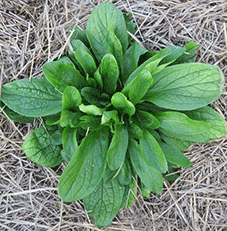 Corn Salad 'Large Dutch'
UT
Corn Salad 'Large Dutch'
UTCorn Salad is an annual cool season crop and frost hardy. 'Large Dutch' forms a rosette of large, tender, dark green leaves 20 cm high. Easy to grow and a pleasant alternative to lettuce for salads, with a delicate, nutty flavour. It can also be cooked for use in soups and omelettes and as a spinach substitute. Sow late summer to mid-autumn in temperate areas. Sow late autumn to early winter in subtropical areas. Unlikely to do well in tropical areas. Days to harvest: 50. SC550 (approx. 150 seeds per pkt.) SC634 SC635 SC552 |
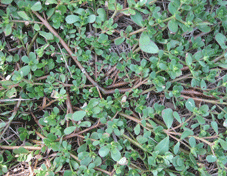 Purslane / Pigweed from Weed to Vegetable
Scientists report that purslane Portulaca oleracea, which is palatable either raw or cooked, is extremely high in omega-3 fatty acids, which have been claimed to reduce the risk of heart disease. It also contains levels of Vitamin E, six times higher than spinach. Reference: Hortideas 10 (2) |
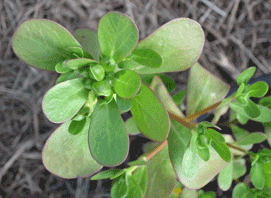 Golden Purslane
H
UT
Golden Purslane
H
UTPortulaca oleracea var. sativa syn. Pursulane Popular salad leaves in France with a crisp texture and mild taste. Golden leaves are juicy and tender and 4 times the size of the wild herb. Excellent source of natural antioxidants, very high in vitamins. Copes well with hot weather. Suitable for temperate, subtropical and tropical areas. SG100 (approx. 150 seeds per pkt.) SG111 SG114 SG115 |
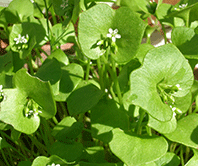 Miner's Lettuce
UT
Miner's Lettuce
UTNo WA Claytonia perfoliata syn. Winter Purslane Miner's Lettuce is a small, trailing plant with dainty, heart-shaped, fleshy leaves and tiny, white flowers. It is an annual plant to 25 cm high, suitable for cool season growing and very frost hardy. It prefers partial shade to heavy shade and cool, damp conditions. The leaves look attractive in salad and have a fresh flavour. It is nutritious, high in vitamins and minerals, easy to grow in the right spot and will re-grow after cutting. It can also be cooked as a spinach substitute. It germinate best at 12 - 20°C soil temperature. Sow in autumn to early winter in temperate areas; late autumn to winter in subtropical areas; it is unlikely to do well in tropical areas. The soil should be fertile, well drained, with a pH range 6 - 7. Days to harvest: 42; in the right conditions will self-sow the following year. SM150 (approx. 75 seeds per pkt.) No WA SM159 No WA |
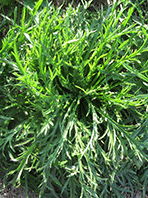 Minutina
 UT
UTPlantago coronopus Syn. Buckhorn's Plaintain, Erba Stella A unique, cold weather salad green prized in Italy for its mild nutty flavour. It is a small plant with a rosette of slender green leaves. It will regrow after cutting and is extremely cold hardy. It will provide a crunchy texture to salads without fibre; the flower buds are edible. SM153 (approx. 100 seeds per pkt.) SM193 |
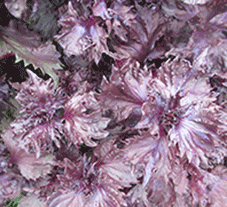 Perilla 'Red Shiso'
H
UT
Perilla 'Red Shiso'
H
UTPerilla frutescens crispa Syn. Beefsteakplant, Summer Coleus This Japanese culinary herb is a very aromatic plant, with a flavour between mint and basil. It is a great addition to salads and a very ornamental garnish. The leaves are popular in Japan for flavouring raw fish, bean curd, pickles and tempura. It is also used to give a scarlet colour to pickled plums and preserved ginger. The plants prefer a sunny open position in moist, fertile, well-drained soil. The seeds germinate at 20 - 22°C; germination is slow and can take up to 30 days. Sow spring to early summer in temperate areas; spring to summer in subtropical areas; during the dry season in tropical areas. Days to bloom: 80 - 85 days. SP172 (approx. 50 seeds per pkt.) |
|
Rocket
Eruca sativa Syn. Roquette, Arugula Rocket is a popular, fast growing, spicy salad green. Rocket can be made into a spicy pesto and used to flavour dips; rocket flowers are a tasty addition to salads. It does best as a cool season annual; avoid sowing during hot weather. The young rocket leaves have the best flavour, after flowering the leaves become bitter. The flowers are attractive to beneficial insects. The plants prefer a sunny open position in moist, fertile, well-drained soil. It self-sows readily. The seeds germinate at 10 - 25°C soil temperature in 5 - 7 days. Sow spring to early summer in temperate areas; March to September in subtropical areas; April to July with shade in tropical areas. Sow 10 mm deep, cover with seed raising mix or fine soil, sow direct where it is to grow. Keep the row short and sow small crops every 3 weeks for a continuous supply. Thin the seedlings to 15 cm apart; keeping the soil evenly moist will slow down bolting. |
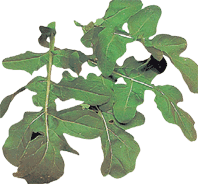 Rocket
OG
Rocket
OGEruca sativa syn. Roquette, Arugula Rocket is a popular, fast growing, spicy salad green. The young rocket leaves have the best flavour, after flowering the leaves become bitter. Rocket will tolerate any soil in full sun, although it prefers a moderate to rich loam. Sow spring to early summer in temperate areas; March to September in subtropical areas; April to July with shade in tropical areas. SR104 (approx. 150 seeds per pkt.) SR227 |
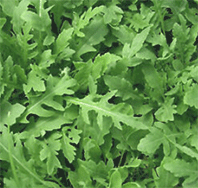 Rocket 'Pronto'
UT
Rocket 'Pronto'
UTEruca sativa Syn. Roquette, Arugula Rocket 'Pronto' is an improved form of common rocket and is a very attractive, quick growing salad green. The highly serrated, mid-green leaves resemble the shape of wild rocket yet are only mildly spicy with a nutty, cress-like flavour. The plants are taller than common rocket, growing to over 30 cm high. Sow spring to early summer in temperate areas; March to September in subtropical areas; April to July with shade in tropical areas. SR105 (approx. 150 seeds per pkt.) SR106 SR107 |
 Rocket 'Sylvetta'
UT
Rocket 'Sylvetta'
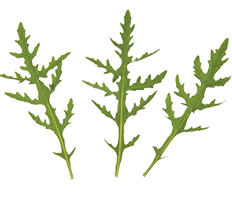
UTNo SA / VIC Diplotaxis tenuifolia Syn. Wild rocket, roquette, selvatica A completely different plant to standard rocket. 'Sylvetta' has dark green, deeply indented leaves with a piquant, peppery flavour. It is slower growing with small, yellow, edible flowers. The plant tends to sprawl, so needs a bit of room; it also may self sow. It is more heat and cold tolerant than standard rocket. A unique addition to a salad and can also be added to stir-fries. It prefers a moderate to rich loamy soil. Grows from full sun to partial shade. Sow seed spring and autumn, avoid sowing during hot weather. Keep soil evenly moist for tender leaves that are not too spicy. Days to harvest: 50 SR180 (approx. 100 seeds per pkt.) No SA / VIC SR181 No SA / VIC |
|
Salad Mix
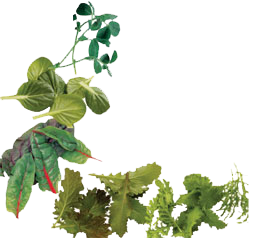
Imagine a salad that includes many taste and texture sensations: bitter, sweet, tangy, crunchy and tender. Growing a salad mix is probably the simplest way to boost the vitamins and anti-oxidants in your diet. The seeds selected for our mixes are available separately in small packets or as bulk quantities. Seasonal variation in supply may mean the mix contents vary slightly from the description. Detail of seeds included currently, it may change seasonally: Beetroot Bulls Blood, Beetroot Detroit, Chicory Red Dandelion, Endive, Kale Red Winter, Lettuce Brown Romaine, Lettuce Freckles, Lettuce Lollo Rossa Darkness, Lettuce Marvel of Four Seasons, Lettuce Parris Is Cos, Lettuce Royal Oakleaf, Lettuce Salad Bowl Green, Lettuce Salad Bowl Red, Mibuna, Mizuna, Mustard Red Giant, Rocket, Silverbeet Colour Mix, Silverbeet Silver Ribs, Silverbeet Ruby, Spinach Galilee, Spinach Giant of Winter. Microgreens Microgreens, salad mix, mesclun and baby leaf are new terms for many gardeners. So what are they and are they worth growing in the home garden? Microgreens are basically many of the same leafy greens as are used for salad mixes but are cut at a smaller stage and only harvested once. Microgreens growing information... |
 Salad Mix
UT
Salad Mix
UTFor the gourmet, this colourful mix may include leaf lettuces, chicory, endive, rocket, beetroot greens, kale, mizuna, mustard, silverbeet and spinach. SS133 (approx. 600 seeds per pkt.) SS189 SS210 Salad mix growing information... |
|
Are you looking for organic lettuce mix?
|
 Sorrel - Garden 'De Belleville'
UT
Sorrel - Garden 'De Belleville'
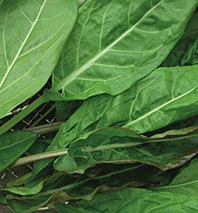
UTNo WA Rumex acetosa syn. Common Sorrel, English Sorrel 'De Belleville' is a French heirloom cultivated since the 1600's. It has arrow-shaped, pale green leaves to 8 cm long. The flavour is tangy and lemony, the texture is smooth and crisp. Use it as a salad green; to add zest to fish, eggs, potatoes; to make soup; or mixed with spinach in spanakopita. Nutritionally it contains vitamins A and C; minerals calcium, iron, phosphorus, potassium and magnesium. Days to harvest: 60 SS251 (approx. 150 seeds per pkt.) No WA SS252 No WA |
 Sorrel 'Red Vein'
UT
Sorrel 'Red Vein'
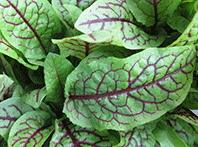
UTNo WA Rumex sanguineus 'Red Vein' has bright green leaves with contrasting dark red stems and veins. It is a herbaceous, hardy perennial to 30 cm high. The flavour is sharp, tangy and lemony, the texture is smooth and crisp. It is mainly used as a salad green or baby leaf as the older leaves become tough. It also makes a beautiful garnish. Nutritionally it contains vitamins A and C; minerals calcium, iron, phosphorus, potassium and magnesium. It germinates best at 7 - 23°C soil temperature. Sow in spring in temperate areas; March - September in subtropical areas; April - July in tropical areas. Choose a position in partial shade. Preferred soil is fertile and well drained; it will tolerate acid conditions pH 5.5 - 6.8. Harvest in 55 days by picking outer leaves. Plants can be propagated by division. SS222 (approx. 150 seeds per pkt.) No WA SS254 No WA Sorrel 'Red Vein' plants are available seasonally. |
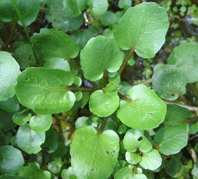 Watercress 'Aqua Large Leaf'
UT
Watercress 'Aqua Large Leaf'
UTNasturtium officinale Watercress is a perennial, hardy aquatic creeper that grows naturally in gently flowing streams, it has small white flowers all summer long. The young shoots and leaves are very nutritious with a spicy, peppery taste. It has proven health properties and is rich in vitamin A, C, calcium, iron and folate as well as isothiocyanates which are cancer-fighting compounds. It is used in salads, soups and sandwiches. Watercress can be grown successfully in ponds in full sun; in very moist, partially shaded sites in the garden; or in a large, self-watering pots placed in the shade. Sow the seed in spring or autumn. Suitable for all areas. SW114 (approx. 100 seeds per pkt.) SW144 SW165 Watercress plants are available seasonally. |
At Green Harvest we are passionate about open-pollinated, heirloom seed as we believe it is a resource belonging to all people,
not a product to be exploited by a few. Open-pollinated vegetable seeds are genetically diverse treasures that have been passed
on from generation to generation of gardeners. We invite you to contact us
if you would like to help us preserve open-pollinated seed varieties in Australia.
More information on seed saving...
|
Green Harvest specialises in seeds which are:
|


A
free
Successful Seed Raising Guide is included with your first seed order from Green Harvest.
Seed to WA:
A $6.95 Quarantine Fee will be charged for all seed orders to WA. Green Harvest is sharing the cost of
the quarantine fee with all our WA customers.
Read more...
Home
Green Harvest Organic Gardening Supplies is permanently closed as of 5pm on 1-11-2023.
We will not be taking orders by this website, in person, by phone or email. Our display garden and retail shop are closed forever.
Read more...
Phone:07 54357000
Phone calls will only be responded to sporadically and only in reference to orders placed prior to 2-11-2023. All the useful growing and organic pest management research and resources are available on this website for a while still.
We guarantee our seeds to the value of the purchase price. We are happy to replace the seeds, give you a credit or refund, whichever you prefer. Other than our guarantee to the extent of the purchase price Green Harvest gives no other warranty expressed or implied. No liability will be accepted by Green Harvest, its owners or employees as to the accuracy of any information. No responsibility will be taken for damage to property or persons due to information given about a product or technique. No responsibility will be taken for the loss of a crop or income due to information given about a product or technique.
 Shopping here is private and secure.
Copyright © 2001 - 2024 Green Harvest Organic Gardening Supplies
No part of this website may be reproduced without permission of the owner