| Organic Seeds | Edible Plants | Organic Pest Controls | Books | Tools, Propagation & Fertilisers | Sprouting & Microgreens | Poultry Supplies | Specials & Gift Ideas |

Top

We will send an email to this address*
when is next available
* we will use this email address only for this notification and then we will delete it.
 Home
Home
Green Harvest Organic Gardening Supplies is permanently closed as of 5pm on 1-11-2023.
We will not be taking orders by this website, in person, by phone or email. Our display garden and retail shop are closed forever.
Read more...
Phone:07 54357000
Phone calls will only be responded to sporadically and only in reference to orders placed prior to 2-11-2023. All the useful growing and organic pest management research and resources are available on this website for a while still.
Fruit Trees for Small Gardens © Frances Michaels
If you have been missing out on the taste of luscious, juicy home-grown fruit in the mistaken belief that you simply don't have the available space, then it may be time to think again. First free yourself from the idea that fruit trees need to be in a separate part of the garden to ornamentals. This belief in 'appropriateness' in planting is comparatively recent; once upon a time cottage gardens simply grew whatever was useful or beautiful together in one area. Whether you have a small, inner-city courtyard or even just a balcony, there is always room for at least one fruit tree. To make the choice easier I've narrowed it down to a list of attractive, hardy, relatively pest-free, delicious fruits.
So in return for all your gardening efforts, why not let your garden provide you with not only beauty but healthy, sun-ripened fruit?
Hard Choices
Now comes the hard part, narrowing your choices down to fit the space available. The first rule is: only plant fruit you like to eat! Then select the fruits most suited to your area, as this will give you minimal disease problems and a better yield. At it's most basic, being suitable means the plant evolved in a climatic zone similar to your own.
Factors To Improve Your Success Rate
Make the most of your space! Allowing your fruit trees to grow too tall is an easy mistake to make. My personal motto when it comes to pruning is 'if I can't reach it, I cut it off'. Tall fruit trees are simply a management nightmare, remember you need to reach the fruit to thin it, protect it from birds and fruit fly and to harvest it, the reward for the whole exercise. Tall fruit trees necessitate a ladder, changing fruit growing into a 'hazardous to health' activity. Space saving ideas you can try include:
Container growing can be a good idea but examples of healthy fruit trees in pots are few and far between. This is because maintaining a healthy fruit tree requires constant care, plants in pots are not as forgiving as those in the open ground. Don't even consider container growing if you will be unable to remove the tree, trim the roots and re-pot every 2 years or so. If you decide to go ahead, invest in containers at least 20 litres in size, planter bags can be an inexpensive alternative. Install a watering system up through a drainage hole in the pot, either with a dripper or a micro-spray fitting. The watering system needs to be automatic if you plan on summer holidays. Buy top quality potting mix and enrich it with added coir peat to improve water and nutrient retention.
Pollination
For your trees to set fruit properly, their pollination requirements must be met. With limited space, look for cultivars that are self-fertile i.e. do not need cross-pollination or consider 'Duo' and 'Trio' plantings or a multi-grafted tree.
Understanding The Elusive 'Chill Factor'
Many fruit and nut trees from cooler areas have what is called a 'chilling requirement', this is defined as the total number of hours needed annually, below 7°C. Without a sufficient chilling period fruit trees may grow well but will simply not set fruit. Avoid setting yourself up for this disappointment by finding out the average chilling hours your area receives and only plant trees that will have their chilling needs met. Chilling hours vary with cultivars of fruit so for example cultivars of apples can be either low, medium or high chill cultivars, with between 300 - 1200 chilling hours needed. Citrus do not have a chilling requirement.
 Microclimate
When selecting your fruit trees, establish a short-list and then let the conditions choose the tree. If a position is hot and dry, choose the tree that will best cope with this. If you would like to grow fruit trees that are from a different climate zone, look for ways to modify the microclimate to improve your chances of success. For example, grapes need dry weather once the fruit is ripening, in an area with summer rainfall, try planting the grape to climb up veranda posts under the shelter of the eaves, to protect the fruit from too much moisture.
The Dreaded Fruit Fly
Many gardeners in Australia put fruit growing into the 'too hard' basket because of that nasty pest, the fruit fly. There are two straightforward solutions:
Many tropical fruit trees grow very large making them difficult to fit into small backyards, a common sight in northern Australia is one large mango tree completely filling a small backyard. Avoid buying or growing trees from seed as they tend to be much taller than grafted trees. The book Tropical Food Gardens by Leonie Norrington is an excellent reference, as well as a great read.
 Abiu
Pouteria caimito
Abiu
Pouteria caimito
Abiu are attractive trees that with regular pruning can be kept to 3 or 4 metres. The fruit is bright yellow, about the size of a large egg and delicious eaten fresh. Try to buy a grafted tree, seedlings can be very slow to fruit.
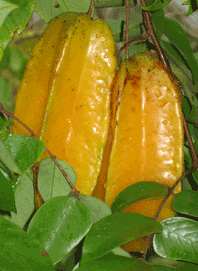
Carambola syn. Five Corner Fruit Averrhoa carambola
Most people will recognise the distinctive yellow fruit of the carambolas, sliced it gives a decorative star-shape. The trees have beautiful pink flowers but can grow to around 8 metres, if you regularly prune you can keep them to a manageable 3 metres. They can be successfully grown in containers, which helps to restrict the size. Good cultivars include: 'Fwang Tung', '11.1', 'Thai Knient'.
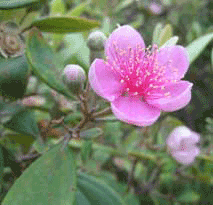
Ceylon Hill Gooseberry Rhodomyrtus tomentosa
An attractive shrub to only 1.5 m tall with very ornamental deep rose-pink or mauve flowers followed by small round purple berries. The bush is frost hardy and will fruit as far south as Melbourne. It is useful as a hedge or container plant.
 Pawpaw
Carica spp.
Pawpaw
Carica spp.
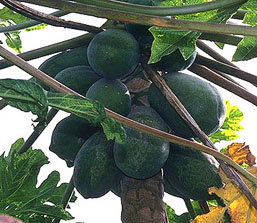
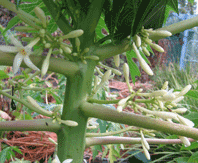
Home-grown pawpaw ripened on the tree beats the bought variety hands down. Trees are damaged by frost so need sheltered positions. Male and female flowers usually appear on separate trees although bisexual trees exist, these hermaphrodite trees do best in tropical areas. Try planting seed from a pawpaw with a good flavour, grown in your area. Be prepared to thin heavily to remove the excess males, because only one pollinator is needed for up to 8 female trees. Male pawpaw flowers (pictured) have longer stems than the female pawpaws, the female flowers are held close to the tree trunk.
Fruit Trees And Vines For Subtropical Areas
Just like in the tropics, many subtropical trees can grow very large, check the mature size before buying.
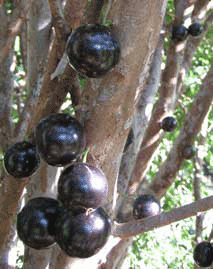
Jaboticaba Myrciaria cauliflora
An excellent ornamental shrubby tree for warmer areas, that tolerates light frost. The fruit is similar to a large black grape and as the fruit is hidden on the internal branches there are usually no bird problems. It is also resistant to fruit fly. Jaboticabas may crop several times a year, depending on water availability and can be pruned hard to keep as a shrub.
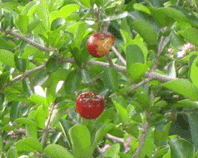
Acerola syn. Barbados Cherry Malpighia glabra
An attractive fruiting shrub with pretty pink flowers and glossy dark green leaves, the bright red fruit is extremely high in vitamin C, up to 40 mg in one small fruit. Beats the taste of a vitamin tablet any day of the week! The fruit is popular with birds so plan to cover the shrub. Good cultivars include: 'Florida Sweet', 'California Honey', 'High C'.
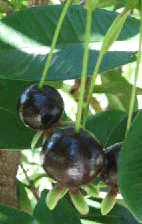
Grumichama Eugenia brasiliensis
This very attractive tree with shiny leaves and starry white flowers produces fruit similar to a cherry. It has the added advantage of being resistant to fruit fly. Unfortunately the birds are keen on them too, so prune it regularly to keep it bushy so a bird net can be thrown over it.
 Passionfruit
Passiflora spp.
Passionfruit
Passiflora spp.
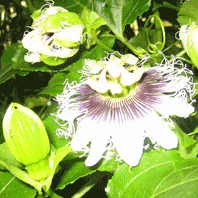
Passionfruit vines are evergreen and can be short-lived due to the woody passionfruit virus affecting the vines so start a new one every few years. Vines will bear better with cross-pollination, particularly important for the yellow types. Good cultivars include: 'Golden Casket', 'Lacey', 'Purple Gold', 'Panama Red' and 'Panama Gold'. For cooler areas try 'Nelly Kelly' or 'Banana Passionfruit'.
Persimmon Diospyios kaki
Persimmons are remarkably decorative for such a productive tree with colourful autumn foliage and golden globes of fruit left hanging on the tree after the leaves have fallen. 'Fuyu' is a non-astringent cultivar that produces without cross-pollination. Persimmons will grow well in temperate areas too.
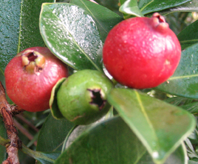
 Strawberry Guava syn. Cherry Guava
Psidium cattleianum
Strawberry Guava syn. Cherry Guava
Psidium cattleianum
A compact, evergreen bushy shrub to 3 - 6 m in height, the white flowers bloom in late spring. The fruit is wine-red, with a very thin skin and believed to have the finest flavour of any guava. Strawberry guavas will grow in a wide range of soils. Heavy frost will damage the plants. It is useful as a fruiting hedge and windbreak.
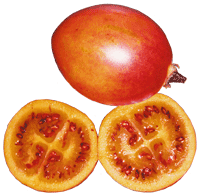
Tamarillo Cyphomandra betacea
Tamarillos can be grown from seed by buying a good flavoured fruit in the supermarket and then sowing the seeds in spring. Dark red fruits tend to be more acidic than orange types. A short-lived shrubby tree, tamarillos are very attractive with large heart-shaped leaves and glossy fruit, with the added advantage of being pretty resistant to fruit fly.
Fruit Trees And Vines For Temperate Areas
Apples
Consider growing your own apples so you can experience some of the excellent cultivars not commonly seen in the supermarket. Apples are suited to cooler areas, as they need a long period of winter cold with between 1000 - 2000 chilling hours, they also require cross-pollination. Only plant dwarf apples, as standard apples can grow up to 10 metres or more if left unpruned. Good apple cultivars for the home gardener include: 'Gala', 'Spartan', 'Red Fuji', 'Akane', 'Sturmer Pippin', 'Princess Alexandria'.
The Ballerina range of dwarf apple cultivars 'Waltz', 'Bolero' and 'Polka' are worth considering, they require no pruning and are suitable for pots, as they only grow 1 - 2 m tall on a single stem. Trees can be grown in groups as a mini orchard, or as a hedge.
Gardeners in warmer areas can plant low chill apples such as 'Anna' and 'Dorset Gold'. 'Pink Lady', 'Golden Delicious', 'Sundowner' and 'Granny Smith' are also relatively low chill apples.
A range of great articles on fruit growing and a simply magnificent range of heritage fruit trees for sale www.woodbridgefruittrees.com.au
Blueberry Vaccinium spp.
Blueberries are attractive shrubs with small bell-like flowers that can be grown across a wide climate range by selecting the right cultivar. They are fussy about soil, requiring acid conditions and constant moisture. Avoid positions close to any cement work. Plant more than one, as cross-pollination is needed for most types. For warmer areas cultivars 'Gulf Coast' and 'Sunshine Blue' are a good choice.
Hazelnut Corylus avellana
Hazelnuts make a useful hedge in cool areas, they are very hardy to frost and need 800 - 1600 chilling hours. Cross-pollination is important to get nuts, keeping in mind that they are wind-pollinated so near to be close to each other. Suitable cultivars are: 'Red Avelline', 'White American', 'White Avelline', 'Cosford'.
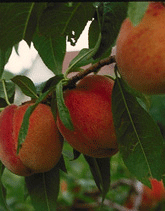 Kiwifruit
Actinidia deliciosa
Kiwifruit
Actinidia deliciosa
Kiwifruit are deciduous vines and need both a male and female plant. A lot of pruning is required so access is important, unpruned kiwis are a bit like having a trifid in the garden! Kiwis require a cooler, wind sheltered, east-facing site with some winter chill. Kiwis will bear as far north as SE Queensland in cooler, elevated locations.
Peach and Nectarine Prunus spp.
Peaches and nectarines are well worth growing at home, simply so you can experience the joy of tree-ripened fruit. Select a cultivar based purely on flavour and suitability to your area. Regular pruning is critical to keep trees productive but also so the tree can be protected from birds and fruit fly. Peaches and nectarines vary in chilling requirement from 150 - 1200 hours. Cultivars of peaches with a great flavour include: 'Anzac', 'Halehaven', 'Fragar', 'Millicent', 'Starking Delicious', 'Glenalton'. Good cultivars of nectarines include: 'Gold Mine', 'Independence', 'Flavourtop'.
There are also 'miniature' cultivars available that grow to approximately 1.5 metres, making them very suitable for containers or small gardens. The peach 'Pixzee' and the nectarine 'Nectazee' produce full-size fruit on dwarf trees with showy pink blossom, approx. 500 chilling hours is required.
For gardeners in subtropical areas there are low-chill (150 - 350 chilling hours) peaches and nectarines available: Peach 'Tropic Beauty', 'Tropic Snow', 'Flordaprince', 'Flordagold'; Nectarine 'Sundowner'.
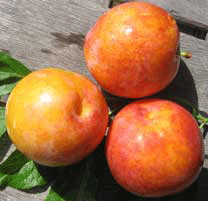 Plum
Prunus spp.
Plum
Prunus spp.
Plums should definitely be a contender if you only plan to have one or two fruit trees in your garden, as they are very hardy. Plums come as 2 main types; European plums Prunus domestica (cultivars: 'Angelina', 'Green Gage', 'Grand Duke', 'President') and Japanese blood plums Prunus salicina (cultivars: 'Satsuma', 'Santa Rosa', 'Frontier', 'Mariposa') with a different chilling requirement for each. European plums need 700 - 1000 hours; Japanese plums need 500 - 900 hours making them more suitable for warmer, coastal areas. All plums need cross-pollination so consider a multi-grafted tree or a 'Duo' planting. European and Japanese plums will not cross-pollinate each other. A tree with a dwarf rootstock can be kept to 2.5 m in height, making it easy to protect from birds and fruit fly. 'Green Gage', with greenish-yellow fruit, has the added advantage that it is more likely to be ignored by birds than the dark red cultivars. 'Satsuma', 'Gulf Ruby' and 'Gulf Gold' all have low chilling requirements of about 400 chilling hours. 'Flavor Supreme' Pluot® is a new plum / apricot cross with a sweet flavour, it requires cross-pollination by a 'Mariposa' plum.
Fruit Trees And Vines For Mediterranean Areas
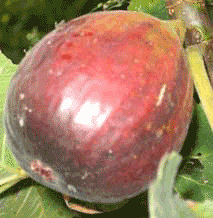
Fig Ficus carica
Figs will grow over a wide climate range but prefer areas with dry summers, rain on the fruit crop will cause fruit splitting and fruit rots. Figs can be espaliered on a north or west facing wall. Fig 'Brown Turkey'
Grape Vitis spp.
Grape vines are useful wherever summer shade and winter sun are needed. Vines can live to a great age so make sure you provide a strong trellis or pergola for them to grow on. There are many grape cultivars available, select one to suit your personal preference. For subtropical or coastal areas disease resistance is important, good choices include: 'Muscat Hamburg', 'Isabella', 'Red Flame', 'Pink Iona', 'Carolina Blackrose'. Grapes can be grown successfully in containers.
Mulberry Morus spp.
'Shahtoot' is a particularly good mulberry for small gardens as the fruit are cream coloured and won't stain clothes. If you prefer a black mulberry take a cutting from one with a good flavour while it is dormant or hunt down one on a dwarf rootstock. By closely planting mulberries and regular hard pruning, you can create a fruiting hedge. Mulberries grow over one of the widest climate ranges of any fruit.
 Pomegranate
Punica granatum
Pomegranate
Punica granatum
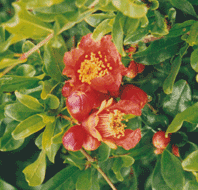
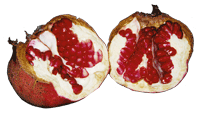
Pomegranate is very hardy shrub that can tolerate extremes of heat, cold and drought. The vibrant red flowers and bronze new growth make this a highly ornamental as well as productive choice for the garden. Pick the fruit when fully ripe but before the skin splits, they will continue to sweeten in storage. Recent research in Israel on pomegranate juice has demonstrated it has powerful antioxidant effects as well as being helpful in the treatment and prevention of breast cancer.
 Quince
Cydonia oblonga
Quince
Cydonia oblonga
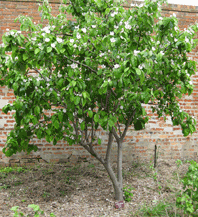
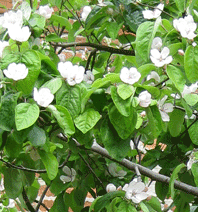
Quince are survivors, native to the Middle East and very beautiful trees with lovely pink flowers. This is a perfect candidate for the single tree in a courtyard planting, needing no cross pollination. The fragrant golden fruit needs cooking, but you will experience a glow of pride from a shelf full of ruby red quince jelly and gourmet cooks of your acquaintance will be happy to deal with the surplus. Quince has a low chilling requirement and will still produce in northern NSW and southern Queensland. Good cultivars include: 'Champion', 'Smyrna'.
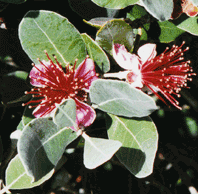 Other hardy, drought tolerant fruit trees for Mediterranean or arid area gardens include jelly palm, feijoa
(pictured), almond and olive (best avoided if likely to be weedy in your area). Subtropicals worth giving a go include
strawberry guava, jaboticaba, tamarillo,
babaco and custard apple.
Other hardy, drought tolerant fruit trees for Mediterranean or arid area gardens include jelly palm, feijoa
(pictured), almond and olive (best avoided if likely to be weedy in your area). Subtropicals worth giving a go include
strawberry guava, jaboticaba, tamarillo,
babaco and custard apple.
We sell some fruit trees, shrubs and vines as seed.
 Citrus
 spp.
Citrus
Citrus spp.
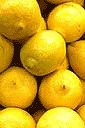
Citrus require their own special category as there is a cultivar of citrus for every climate zones and they simply can't be beaten for usefulness and ornamental appearance in the home garden. Every garden should have at least one citrus tree, for the fragrance of the blossoms alone. In warmer areas Tahitian limes are a better choice than lemons if there is only room for one tree. They crop over a longer period, are less thorny, and are smaller trees than lemons and the fruit can be used in a similar way. Of the lemons 'Eureka' is a good choice, less prone to fruit fly damage than 'Meyer' or 'Lemonade'. More information on Organic Citrus Care
Specialist Tree Nurseries
Daleys Fruit Tree Nursery PO Box 154 Kyogle NSW 2474 Phone: (02) 66321441 Fax: (02) 66322585
Website: www.daleysfruit.com.au Website includes heaps of information, mail-order available Australia wide.
Fruit Salad Tree Company Gulf Road Emmaville NSW Australia 2371 Phone/fax: (02) 67347204
Website: www.fruitsaladtrees.com Specialise in multi-grafted trees.
 Woodbridge Fruit Trees Bob Magnus' Fruit Tree Nursery c/- PO Woodbridge TAS 7162
Phone (03) 62674430 Specialising in heritage apple varieties and dwarf trees. Catalogue available April/May, send
3 x 45c stamps
Woodbridge Fruit Trees Bob Magnus' Fruit Tree Nursery c/- PO Woodbridge TAS 7162
Phone (03) 62674430 Specialising in heritage apple varieties and dwarf trees. Catalogue available April/May, send
3 x 45c stamps
Email: mail@woodbridgefruittrees.com.au
Website: www.woodbridgefruittrees.com.au
Perry's Fruit and Nut Nursery McLaren Flat, South Australia 5171 Phone (08) 83830268, Fax (08) 83830503
Website: www.perrysfruitnursery.com.au
Limberlost Nursery 113 Old Smithfield Road Freshwater, near Cairns QLD 4870 Phone: (07) 40551042
If you have been missing out on the taste of luscious, juicy home-grown fruit in the mistaken belief that you simply don't have the available space, then it may be time to think again. First free yourself from the idea that fruit trees need to be in a separate part of the garden to ornamentals. This belief in 'appropriateness' in planting is comparatively recent; once upon a time cottage gardens simply grew whatever was useful or beautiful together in one area. Whether you have a small, inner-city courtyard or even just a balcony, there is always room for at least one fruit tree. To make the choice easier I've narrowed it down to a list of attractive, hardy, relatively pest-free, delicious fruits.
So in return for all your gardening efforts, why not let your garden provide you with not only beauty but healthy, sun-ripened fruit?
Looking for a bit more space? Then if you have a lawn, its time to assess just how useful it actually is and
consider replacing it with fruiting shrubs and trees. The time you save on mowing the lawn could be spent
harvesting instead!
Hard Choices
Now comes the hard part, narrowing your choices down to fit the space available. The first rule is: only plant fruit you like to eat! Then select the fruits most suited to your area, as this will give you minimal disease problems and a better yield. At it's most basic, being suitable means the plant evolved in a climatic zone similar to your own.
Factors To Improve Your Success Rate
Make the most of your space! Allowing your fruit trees to grow too tall is an easy mistake to make. My personal motto when it comes to pruning is 'if I can't reach it, I cut it off'. Tall fruit trees are simply a management nightmare, remember you need to reach the fruit to thin it, protect it from birds and fruit fly and to harvest it, the reward for the whole exercise. Tall fruit trees necessitate a ladder, changing fruit growing into a 'hazardous to health' activity. Space saving ideas you can try include:
- Dwarf rootstocks, where available, are a must for the home gardener, reducing pruning effort and maximising space.
- Multi-grafted fruit trees allow pollination requirements to be met and give you a range of flavours to be enjoyed from the one tree. Remember to order well ahead at your local nursery for multi-grafts and dwarf rootstocks.
- 'Duo' or 'Trio' planting is where 2 or 3 fruit trees are planted in the hole, this has the same advantages as above but reduces the risk of the stronger cultivar dominating the tree.
Container growing can be a good idea but examples of healthy fruit trees in pots are few and far between. This is because maintaining a healthy fruit tree requires constant care, plants in pots are not as forgiving as those in the open ground. Don't even consider container growing if you will be unable to remove the tree, trim the roots and re-pot every 2 years or so. If you decide to go ahead, invest in containers at least 20 litres in size, planter bags can be an inexpensive alternative. Install a watering system up through a drainage hole in the pot, either with a dripper or a micro-spray fitting. The watering system needs to be automatic if you plan on summer holidays. Buy top quality potting mix and enrich it with added coir peat to improve water and nutrient retention.
Pollination
For your trees to set fruit properly, their pollination requirements must be met. With limited space, look for cultivars that are self-fertile i.e. do not need cross-pollination or consider 'Duo' and 'Trio' plantings or a multi-grafted tree.
Understanding The Elusive 'Chill Factor'
Many fruit and nut trees from cooler areas have what is called a 'chilling requirement', this is defined as the total number of hours needed annually, below 7°C. Without a sufficient chilling period fruit trees may grow well but will simply not set fruit. Avoid setting yourself up for this disappointment by finding out the average chilling hours your area receives and only plant trees that will have their chilling needs met. Chilling hours vary with cultivars of fruit so for example cultivars of apples can be either low, medium or high chill cultivars, with between 300 - 1200 chilling hours needed. Citrus do not have a chilling requirement.
MicroclimateWhen selecting your fruit trees, establish a short-list and then let the conditions choose the tree. If a position is hot and dry, choose the tree that will best cope with this. If you would like to grow fruit trees that are from a different climate zone, look for ways to modify the microclimate to improve your chances of success. For example, grapes need dry weather once the fruit is ripening, in an area with summer rainfall, try planting the grape to climb up veranda posts under the shelter of the eaves, to protect the fruit from too much moisture.
The Dreaded Fruit Fly
Many gardeners in Australia put fruit growing into the 'too hard' basket because of that nasty pest, the fruit fly. There are two straightforward solutions:
- choose only the fruits that are not attacked,
- keep your trees small, so you can cover the fruit, or even the whole tree, thus dealing with the bird problem as well.
Many tropical fruit trees grow very large making them difficult to fit into small backyards, a common sight in northern Australia is one large mango tree completely filling a small backyard. Avoid buying or growing trees from seed as they tend to be much taller than grafted trees. The book Tropical Food Gardens by Leonie Norrington is an excellent reference, as well as a great read.
Abiu
Pouteria caimitoAbiu are attractive trees that with regular pruning can be kept to 3 or 4 metres. The fruit is bright yellow, about the size of a large egg and delicious eaten fresh. Try to buy a grafted tree, seedlings can be very slow to fruit.
Carambola syn. Five Corner Fruit Averrhoa carambola
Most people will recognise the distinctive yellow fruit of the carambolas, sliced it gives a decorative star-shape. The trees have beautiful pink flowers but can grow to around 8 metres, if you regularly prune you can keep them to a manageable 3 metres. They can be successfully grown in containers, which helps to restrict the size. Good cultivars include: 'Fwang Tung', '11.1', 'Thai Knient'.
Ceylon Hill Gooseberry Rhodomyrtus tomentosa
An attractive shrub to only 1.5 m tall with very ornamental deep rose-pink or mauve flowers followed by small round purple berries. The bush is frost hardy and will fruit as far south as Melbourne. It is useful as a hedge or container plant.
Pawpaw
Carica spp.Home-grown pawpaw ripened on the tree beats the bought variety hands down. Trees are damaged by frost so need sheltered positions. Male and female flowers usually appear on separate trees although bisexual trees exist, these hermaphrodite trees do best in tropical areas. Try planting seed from a pawpaw with a good flavour, grown in your area. Be prepared to thin heavily to remove the excess males, because only one pollinator is needed for up to 8 female trees. Male pawpaw flowers (pictured) have longer stems than the female pawpaws, the female flowers are held close to the tree trunk.
Fruit Trees And Vines For Subtropical Areas
Just like in the tropics, many subtropical trees can grow very large, check the mature size before buying.
Jaboticaba Myrciaria cauliflora
An excellent ornamental shrubby tree for warmer areas, that tolerates light frost. The fruit is similar to a large black grape and as the fruit is hidden on the internal branches there are usually no bird problems. It is also resistant to fruit fly. Jaboticabas may crop several times a year, depending on water availability and can be pruned hard to keep as a shrub.
Acerola syn. Barbados Cherry Malpighia glabra
An attractive fruiting shrub with pretty pink flowers and glossy dark green leaves, the bright red fruit is extremely high in vitamin C, up to 40 mg in one small fruit. Beats the taste of a vitamin tablet any day of the week! The fruit is popular with birds so plan to cover the shrub. Good cultivars include: 'Florida Sweet', 'California Honey', 'High C'.
Grumichama Eugenia brasiliensis
This very attractive tree with shiny leaves and starry white flowers produces fruit similar to a cherry. It has the added advantage of being resistant to fruit fly. Unfortunately the birds are keen on them too, so prune it regularly to keep it bushy so a bird net can be thrown over it.
Passionfruit
Passiflora spp.Passionfruit vines are evergreen and can be short-lived due to the woody passionfruit virus affecting the vines so start a new one every few years. Vines will bear better with cross-pollination, particularly important for the yellow types. Good cultivars include: 'Golden Casket', 'Lacey', 'Purple Gold', 'Panama Red' and 'Panama Gold'. For cooler areas try 'Nelly Kelly' or 'Banana Passionfruit'.
Persimmon Diospyios kaki
Persimmons are remarkably decorative for such a productive tree with colourful autumn foliage and golden globes of fruit left hanging on the tree after the leaves have fallen. 'Fuyu' is a non-astringent cultivar that produces without cross-pollination. Persimmons will grow well in temperate areas too.
Strawberry Guava syn. Cherry Guava
Psidium cattleianumA compact, evergreen bushy shrub to 3 - 6 m in height, the white flowers bloom in late spring. The fruit is wine-red, with a very thin skin and believed to have the finest flavour of any guava. Strawberry guavas will grow in a wide range of soils. Heavy frost will damage the plants. It is useful as a fruiting hedge and windbreak.
Tamarillo Cyphomandra betacea
Tamarillos can be grown from seed by buying a good flavoured fruit in the supermarket and then sowing the seeds in spring. Dark red fruits tend to be more acidic than orange types. A short-lived shrubby tree, tamarillos are very attractive with large heart-shaped leaves and glossy fruit, with the added advantage of being pretty resistant to fruit fly.
Fruit Trees And Vines For Temperate Areas
Apples
Consider growing your own apples so you can experience some of the excellent cultivars not commonly seen in the supermarket. Apples are suited to cooler areas, as they need a long period of winter cold with between 1000 - 2000 chilling hours, they also require cross-pollination. Only plant dwarf apples, as standard apples can grow up to 10 metres or more if left unpruned. Good apple cultivars for the home gardener include: 'Gala', 'Spartan', 'Red Fuji', 'Akane', 'Sturmer Pippin', 'Princess Alexandria'.
The Ballerina range of dwarf apple cultivars 'Waltz', 'Bolero' and 'Polka' are worth considering, they require no pruning and are suitable for pots, as they only grow 1 - 2 m tall on a single stem. Trees can be grown in groups as a mini orchard, or as a hedge.
Gardeners in warmer areas can plant low chill apples such as 'Anna' and 'Dorset Gold'. 'Pink Lady', 'Golden Delicious', 'Sundowner' and 'Granny Smith' are also relatively low chill apples.
A range of great articles on fruit growing and a simply magnificent range of heritage fruit trees for sale www.woodbridgefruittrees.com.au
Blueberry Vaccinium spp.
Blueberries are attractive shrubs with small bell-like flowers that can be grown across a wide climate range by selecting the right cultivar. They are fussy about soil, requiring acid conditions and constant moisture. Avoid positions close to any cement work. Plant more than one, as cross-pollination is needed for most types. For warmer areas cultivars 'Gulf Coast' and 'Sunshine Blue' are a good choice.
Hazelnut Corylus avellana
Hazelnuts make a useful hedge in cool areas, they are very hardy to frost and need 800 - 1600 chilling hours. Cross-pollination is important to get nuts, keeping in mind that they are wind-pollinated so near to be close to each other. Suitable cultivars are: 'Red Avelline', 'White American', 'White Avelline', 'Cosford'.
Kiwifruit
Actinidia deliciosaKiwifruit are deciduous vines and need both a male and female plant. A lot of pruning is required so access is important, unpruned kiwis are a bit like having a trifid in the garden! Kiwis require a cooler, wind sheltered, east-facing site with some winter chill. Kiwis will bear as far north as SE Queensland in cooler, elevated locations.
Peach and Nectarine Prunus spp.
Peaches and nectarines are well worth growing at home, simply so you can experience the joy of tree-ripened fruit. Select a cultivar based purely on flavour and suitability to your area. Regular pruning is critical to keep trees productive but also so the tree can be protected from birds and fruit fly. Peaches and nectarines vary in chilling requirement from 150 - 1200 hours. Cultivars of peaches with a great flavour include: 'Anzac', 'Halehaven', 'Fragar', 'Millicent', 'Starking Delicious', 'Glenalton'. Good cultivars of nectarines include: 'Gold Mine', 'Independence', 'Flavourtop'.
There are also 'miniature' cultivars available that grow to approximately 1.5 metres, making them very suitable for containers or small gardens. The peach 'Pixzee' and the nectarine 'Nectazee' produce full-size fruit on dwarf trees with showy pink blossom, approx. 500 chilling hours is required.
For gardeners in subtropical areas there are low-chill (150 - 350 chilling hours) peaches and nectarines available: Peach 'Tropic Beauty', 'Tropic Snow', 'Flordaprince', 'Flordagold'; Nectarine 'Sundowner'.
Plum
Prunus spp.Plums should definitely be a contender if you only plan to have one or two fruit trees in your garden, as they are very hardy. Plums come as 2 main types; European plums Prunus domestica (cultivars: 'Angelina', 'Green Gage', 'Grand Duke', 'President') and Japanese blood plums Prunus salicina (cultivars: 'Satsuma', 'Santa Rosa', 'Frontier', 'Mariposa') with a different chilling requirement for each. European plums need 700 - 1000 hours; Japanese plums need 500 - 900 hours making them more suitable for warmer, coastal areas. All plums need cross-pollination so consider a multi-grafted tree or a 'Duo' planting. European and Japanese plums will not cross-pollinate each other. A tree with a dwarf rootstock can be kept to 2.5 m in height, making it easy to protect from birds and fruit fly. 'Green Gage', with greenish-yellow fruit, has the added advantage that it is more likely to be ignored by birds than the dark red cultivars. 'Satsuma', 'Gulf Ruby' and 'Gulf Gold' all have low chilling requirements of about 400 chilling hours. 'Flavor Supreme' Pluot® is a new plum / apricot cross with a sweet flavour, it requires cross-pollination by a 'Mariposa' plum.
Fruit Trees And Vines For Mediterranean Areas
Fig Ficus carica
Figs will grow over a wide climate range but prefer areas with dry summers, rain on the fruit crop will cause fruit splitting and fruit rots. Figs can be espaliered on a north or west facing wall. Fig 'Brown Turkey'
Grape Vitis spp.
Grape vines are useful wherever summer shade and winter sun are needed. Vines can live to a great age so make sure you provide a strong trellis or pergola for them to grow on. There are many grape cultivars available, select one to suit your personal preference. For subtropical or coastal areas disease resistance is important, good choices include: 'Muscat Hamburg', 'Isabella', 'Red Flame', 'Pink Iona', 'Carolina Blackrose'. Grapes can be grown successfully in containers.
Mulberry Morus spp.
'Shahtoot' is a particularly good mulberry for small gardens as the fruit are cream coloured and won't stain clothes. If you prefer a black mulberry take a cutting from one with a good flavour while it is dormant or hunt down one on a dwarf rootstock. By closely planting mulberries and regular hard pruning, you can create a fruiting hedge. Mulberries grow over one of the widest climate ranges of any fruit.
Pomegranate
Punica granatumPomegranate is very hardy shrub that can tolerate extremes of heat, cold and drought. The vibrant red flowers and bronze new growth make this a highly ornamental as well as productive choice for the garden. Pick the fruit when fully ripe but before the skin splits, they will continue to sweeten in storage. Recent research in Israel on pomegranate juice has demonstrated it has powerful antioxidant effects as well as being helpful in the treatment and prevention of breast cancer.
Quince
Cydonia oblongaQuince are survivors, native to the Middle East and very beautiful trees with lovely pink flowers. This is a perfect candidate for the single tree in a courtyard planting, needing no cross pollination. The fragrant golden fruit needs cooking, but you will experience a glow of pride from a shelf full of ruby red quince jelly and gourmet cooks of your acquaintance will be happy to deal with the surplus. Quince has a low chilling requirement and will still produce in northern NSW and southern Queensland. Good cultivars include: 'Champion', 'Smyrna'.
Other hardy, drought tolerant fruit trees for Mediterranean or arid area gardens include jelly palm, feijoa
(pictured), almond and olive (best avoided if likely to be weedy in your area). Subtropicals worth giving a go include
strawberry guava, jaboticaba, tamarillo,
babaco and custard apple.
We sell some fruit trees, shrubs and vines as seed.
Citrus
Citrus spp.Citrus require their own special category as there is a cultivar of citrus for every climate zones and they simply can't be beaten for usefulness and ornamental appearance in the home garden. Every garden should have at least one citrus tree, for the fragrance of the blossoms alone. In warmer areas Tahitian limes are a better choice than lemons if there is only room for one tree. They crop over a longer period, are less thorny, and are smaller trees than lemons and the fruit can be used in a similar way. Of the lemons 'Eureka' is a good choice, less prone to fruit fly damage than 'Meyer' or 'Lemonade'. More information on Organic Citrus Care
Specialist Tree Nurseries
Daleys Fruit Tree Nursery PO Box 154 Kyogle NSW 2474 Phone: (02) 66321441 Fax: (02) 66322585
Website: www.daleysfruit.com.au Website includes heaps of information, mail-order available Australia wide.
Fruit Salad Tree Company Gulf Road Emmaville NSW Australia 2371 Phone/fax: (02) 67347204
Website: www.fruitsaladtrees.com Specialise in multi-grafted trees.
Woodbridge Fruit Trees Bob Magnus' Fruit Tree Nursery c/- PO Woodbridge TAS 7162
Phone (03) 62674430 Specialising in heritage apple varieties and dwarf trees. Catalogue available April/May, send
3 x 45c stampsEmail: mail@woodbridgefruittrees.com.au
Website: www.woodbridgefruittrees.com.au
Perry's Fruit and Nut Nursery McLaren Flat, South Australia 5171 Phone (08) 83830268, Fax (08) 83830503
Website: www.perrysfruitnursery.com.au
Limberlost Nursery 113 Old Smithfield Road Freshwater, near Cairns QLD 4870 Phone: (07) 40551042
Home
Green Harvest Organic Gardening Supplies is permanently closed as of 5pm on 1-11-2023.
We will not be taking orders by this website, in person, by phone or email. Our display garden and retail shop are closed forever.
Read more...
Phone:07 54357000
Phone calls will only be responded to sporadically and only in reference to orders placed prior to 2-11-2023. All the useful growing and organic pest management research and resources are available on this website for a while still.
No liability will be accepted by Green Harvest, its owners or employees as to the accuracy of any information. No responsibility will be taken for damage to property or persons due to information given about a product or technique. No responsibility will be taken for the loss of a crop or income due to information given about a product or technique.
 Shopping here is private and secure.
Copyright © 2001 - 2024 Green Harvest Organic Gardening Supplies
No part of this website may be reproduced without permission of the owner