| Organic Seeds | Edible Plants | Organic Pest Controls | Books | Tools, Propagation & Fertilisers | Sprouting & Microgreens | Poultry Supplies | Specials & Gift Ideas |

Top

We will send an email to this address*
when is next available
* we will use this email address only for this notification and then we will delete it.
 Home
Home
Green Harvest Organic Gardening Supplies is permanently closed as of 5pm on 1-11-2023.
We will not be taking orders by this website, in person, by phone or email. Our display garden and retail shop are closed forever.
Read more...
Phone:07 54357000
Phone calls will only be responded to sporadically and only in reference to orders placed prior to 2-11-2023. All the useful growing and organic pest management research and resources are available on this website for a while still.
Spring Green Notes © Frances Michaels
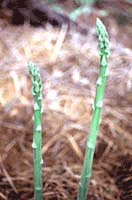 Dedicate a garden bed to asparagus and be rewarded with delicious spears for up to 20 years!
The sweetness of a freshly-picked, crunchy, home-grown asparagus spear is a taste sensation. An easy to grow, long-lived plant, it thrives in a wide climatic range, from temperate, through to maritime and subtropical zones.
Asparagus is a member of the lily family - the delicious spears are the new stems emerging in spring. The plants respond well to good drainage and lots of feeding. Asparagus is bothered by few pests or diseases but some protection of the young shoots from slugs and snails is a good idea. Plant the crowns on mounds in a 40cm deep trench dug in a bed that has been enriched with well-rotted manure. Two-year-old crowns will give you a few spears within months. Our rule of thumb is to pick spears that are thicker than a pencil and leave the skinnier ones. If not cut and picked for eating, the stems will grow up to 1.5m long with feathery, fern-like foliage. These photosynthesise and feed the crown; the following spring, the crown and the spears that emerge from it will be bigger and better! You may need to support the long, slender stems with wire or string from poles at either end of the asparagus bed. In winter, they'll start to turn brown and die off. Time to cut the stems to ground level, then fertilise and mulch the bed, ready for the new season's growth. Once you have harvested a bumper crop, lightly steam a handful of spears and serve with a poached egg and hollandaise sauce for a light, delicious spring supper.
Hollandaise Sauce
 Have you been put off by the time consuming method using a whisk and double saucepan? Try this, it takes only
minutes to make in a blender!
Have you been put off by the time consuming method using a whisk and double saucepan? Try this, it takes only
minutes to make in a blender!
 Birds add a lot to our lives with their bright flashes of colour and morning song. It is hard to imagine living
somewhere the smaller, shrub-living birds are not part of the environment, but sadly this is becoming the norm
in many urban areas and large, cleared areas of farmland. Birds need to be considered as essential residents of
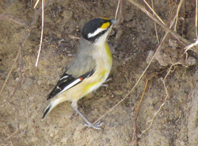
any organic garden or farm. The robins, wrens, honeyeaters, pardalotes (pictured), willy wagtails, thornbills,
flycatchers, warblers and tree-creepers are primarily insect eaters and do an enormous amount of pest control,
particularly of aphids,
scale,
caterpillars and
grasshoppers.
Birds add a lot to our lives with their bright flashes of colour and morning song. It is hard to imagine living
somewhere the smaller, shrub-living birds are not part of the environment, but sadly this is becoming the norm
in many urban areas and large, cleared areas of farmland. Birds need to be considered as essential residents of
any organic garden or farm. The robins, wrens, honeyeaters, pardalotes (pictured), willy wagtails, thornbills,
flycatchers, warblers and tree-creepers are primarily insect eaters and do an enormous amount of pest control,
particularly of aphids,
scale,
caterpillars and
grasshoppers.
These insect eaters are mainly smaller, shrub-dwelling birds who need protection from their predators, including cats and hawks. People who allow their cats free range in the garden will often claim they still have birds but nearly always they only have the larger tree dwelling birds like kookaburras, crows, magpies and currawongs. Fitting any cats with multiple, small bells, or a mirrored collar, helps to prevent decimation of the wildlife population, as does restricting their wandering.
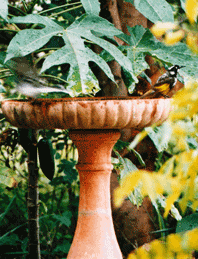 To attract birds provide safe nesting sites, free from predators and with privacy. Dense plantings of native shrubs,
in out-of-the-way corners of the garden will provide important nesting sites for smaller birds, and as a bonus, can
be chosen to provide nectar to attract nectar feeding birds such as Honeyeaters.
To attract birds provide safe nesting sites, free from predators and with privacy. Dense plantings of native shrubs,
in out-of-the-way corners of the garden will provide important nesting sites for smaller birds, and as a bonus, can
be chosen to provide nectar to attract nectar feeding birds such as Honeyeaters.
Including prickly shrubs in the plantings gives added protection from cats. On farms designing a hedgerow of bird-attractant shrubs between cropping areas will provide a range of benefits. In an urban landscape nesting sites for birds that require hollow trees are few and far between. It can take 150 years for a tree to develop a hollow large enough to house owls, parrots, gliders, possums and small insect eating bats. Provision of nesting boxes by urban residents can meet an urgent need and help to maintain a rich diversity of wildlife.
Small, insectivorous bats are nocturnal feeders, and play an important role in the control of night flying insects, including mosquitoes. Sugar Gliders mainly eat insects, such as leaf-eating beetles, moths, grasshoppers and caterpillars, they also feed on sap-suckers that excrete honeydew, such as scale. Water is an essential element in the landscape, whether it is a bird bath or a small pond. Providing a reliable source of water for birds allows them to nest in the garden. Bird baths should be placed close to a nearby refuge of densely foliaged shrubs, to allow easy escape from predators.
Information on design for pest balance.
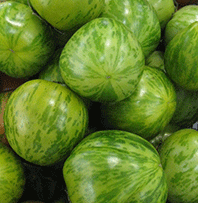 Growing your own tomatoes and harvesting the sun-warmed, aromatic, fully ripe fruit is one of the great rewards of
gardening.
Growing your own tomatoes and harvesting the sun-warmed, aromatic, fully ripe fruit is one of the great rewards of
gardening.
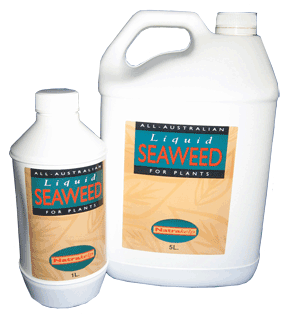
Nothing compares with the taste of a home-grown tomato. Choose an heirloom variety such as 'Green Zebra' with its sweet and tangy, chartreuse flesh and great flavour; or try the sweet and popular 'Cherry Cocktail'. Tomatoes are self-pollinating, so you can have several varieties growing at once and save the seed for the next season. Follow the Successful Seed Raising Guide provided on our website. When it is time to transplant, plant the seedlings deeply, first removing the seed leaves and planting up to the 1st set of true leaves. This expands the root area and speeds maturity. Keep the plants growing vigorously and disease at bay with regular applications of Natrakelp seaweed fertiliser or Seaweed Plant Starter.
If you suspect fruit fly will be a problem, an effective and easy organic solution is to simply cover the fruit with a PestGuard Bag. Or you could create a fruitfly-free zone within your garden by erecting a frame using our new Build A Frame pack and covering it with a Vege Net. Tomatoes don't need insects for pollination so can be covered with a net or bag as soon as blossoms have formed.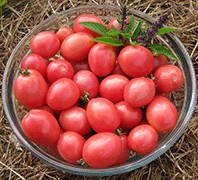
Determinate or Indeterminate
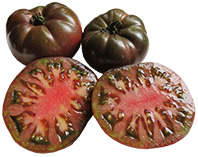
Determinate tomatoes such as 'Thai Pink Egg' and 'Roma San Marzano' are also known as 'Bush' types. They grow to between 0.9 - 1.2 m tall and usually don't require staking. Indeterminate tomatoes or 'Climbing' types usually grow between 1.8 - 2.4 m tall and need staking. Height can be reduced by pruning or by tying the tomato bush to a stake 1.5 m high, then allowing additional growth to just flop over.
Once you have harvested a bumper crop, preserving either as chutney, sauce or semi-dried will mean you can enjoy your tomatoes for many months.
Spicy Tomato Chutney
 Gardeners and farmers the world over compete with wildlife to harvest their crops. The ideal of tree-ripened fruit
can be a real challenge to achieve! Exclusion is an organic, environmentally sustainable and cost effective method
of discouraging birds and fruit bats from raiding your fruit trees.
Gardeners and farmers the world over compete with wildlife to harvest their crops. The ideal of tree-ripened fruit
can be a real challenge to achieve! Exclusion is an organic, environmentally sustainable and cost effective method
of discouraging birds and fruit bats from raiding your fruit trees.
When should nets be in place?
The earlier the better; as soon as possible after fruit is set. Drape the netting directly over the tree and secure it to the ground or around the trunk. Alternatively, build a lightweight polypipe or bamboo frame for the netting; this will improve air circulation and improve access to the fruit.
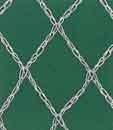
Bird Control Net: This durable, knitted, commercial netting can be re-used for many years. The net is a diamond shape with 16 mm holes. Available in black or white in three sizes: 5 x 5 m, 5 x 10 m and 10 x 10 m. When using netting the Australian Bat Conservation Society recommends that you avoid thin nylon/monofilament netting and that the netting used is stretched taut over a frame, with a mesh size less than 40 mm.
Container growing is ideal for gardeners with limited space but is also an excellent alternative where soil is poor or hard to work with or where pests or the elements make gardening difficult. Large pots, grow bags and hanging planters are all suitable for your container garden and can house salad greens, herbs, potatoes, strawberries and much more. Choose a good-quality potting mix, ensure adequate drainage and fertilise regularly; a seaweed-based fertiliser such as Natrakelp or Seaweed Plant Starter is ideal. Plants can be relocated according to weather conditions and are easily protected from pests with exclusion fabrics such as a Vege Net. A portable salad or herb garden near the kitchen door will provide you with the freshest ingredients possible!
Plants that appear less than healthy and exhibit symptoms such as spots on foliage, fluffy grey fungal growth, powdery white patches, yellow or orange pustules under leaves or the plant yellowing, stunted or wilting could be suffering from a fungal disease.
Black spot, powdery mildew, downy mildew, Botrytis (Grey mould), Anthracnose, rust, Fusarium wilt and damping off are all fungal diseases that can have devastating effects in your garden. They affect a wide range of vegetables and fruit but there are strategies you can employ to minimise their occurrence, spread and impact.
 Garden Design and Plant Selection
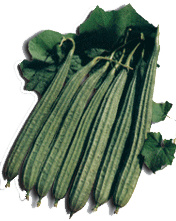
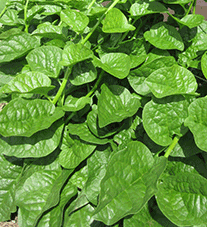
The overall design of your garden plays an important part in creating and maintaining 'garden health'. Make sure that the soil is well drained and that airflow is good. Selecting the plants most suited to your area, whether ornamentals, vegetables or fruit trees will reward you with minimal disease problems. If you live in an area with hot, humid summers then it makes sense to select plants that have developed in these areas; most European vegetables have an Asian equivalent that is likely to be more disease resistant. So try substituting snake beans for French beans, angled luffa (pictured) or New Guinea Bean for zucchini, Ceylon spinach (pictured) for silverbeet and so on.
The simplest strategy of all, however, is to always remove a sick looking plant and destroy it. This is putting the overall health of the garden above that of an individual plant?s survival.
Watering
Keep water off the leaves as much as possible, by watering from below. Fungal spores are often spread by water droplets. Most fungal spores need to be immersed in water for a number of hours in order to germinate; black spot for example needs to be constantly moist for 7 hours to establish. If you have to overhead water, do it early in the day to allow leaves to dry off.
 Crop Rotation
Use long crop rotations of 3 to 5 years. It is important to remember to rotate the plant family, not just the individual vegetable. Getting the timing right can also reduce disease problems; avoid planting vegetables prone to rust, powdery or downy mildew just prior to periods of expected high humidity.
Soil Health
Plant health is as dependent on the soil as our own health is on what we eat. Pay attention to feeding the soil and its micro-fauna; just as many pests are controlled in an organic garden by predatory insects, so many diseases are controlled by a diverse and abundant soil life. Increase the organic matter by composting, green manuring and mulching. Mulching acts as a barrier and helps restrict the spread of fungal spores from the soil onto the plant. Trace elements are critical to plant health; seaweed is a good way to add these essential nutrients - try Natrakelp. Avoid high nitrogen fertilisers, especially in summer when fungal problems are at their height, as soft new growth is very vulnerable to disease.
Golden rule: Stay out of the garden when it is wet.
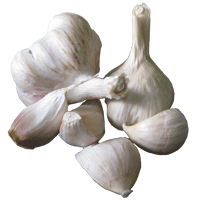 Spring is garlic harvest time in most parts of Australia - time to lift, dry, store and enjoy your crop.
Garlic usually takes about 8 months to produce a bulb. When
the bulbs are ready to lift, the tops will begin to turn brown; don't wait until the tops have completely died
back. Treat the bulbs gently as bruised bulbs do not store well. Hang the whole plant in bunches, or spread on
racks, and allow to dry undercover for 2 to 3 weeks. The skins will then become papery and dry. If you're feeling
dexterous, try plaiting the garlic (soft-neck types only). Alternatively, remove the leaves and roots, to store
on racks or in net bags. Good air circulation is essential. Bulbs keep better stored whole, not separated into
cloves.
Spring is garlic harvest time in most parts of Australia - time to lift, dry, store and enjoy your crop.
Garlic usually takes about 8 months to produce a bulb. When
the bulbs are ready to lift, the tops will begin to turn brown; don't wait until the tops have completely died
back. Treat the bulbs gently as bruised bulbs do not store well. Hang the whole plant in bunches, or spread on
racks, and allow to dry undercover for 2 to 3 weeks. The skins will then become papery and dry. If you're feeling
dexterous, try plaiting the garlic (soft-neck types only). Alternatively, remove the leaves and roots, to store
on racks or in net bags. Good air circulation is essential. Bulbs keep better stored whole, not separated into
cloves.
Garlic does best in light, well-drained soil and likes full sun. It can fail to thrive in humid conditions and it is not unusual for gardeners in the subtropics to lose some of their crop because of excessive moisture. Improve the soil by adding compost or well-rotted animal manures before planting; make sure that you don't use fresh manure as it can prove disastrous for garlic, increasing its susceptibility to disease. Mulch well, as garlic dislikes competition from weeds. Regular watering is important, do not allow the soil to completely dry out during bulb formation. Stop watering once the tops brown.
Hard-Neck and Soft-Neck Garlic
Hard-neck varieties of garlic do best in cooler climates. They produce attractive flower stalks that curve and curl before producing a flower. Purple Monaro is a rocambole type and hard-neck.
Soft-neck varieties tend to do better in warmer climates; they have no flower stalk. Their flavour is spicier, the bulbs keep better and they can be plaited for storage. Soft-neck varieties include Glen Large and Italian White.
Planting
The main garlic planting time in Australia is March - April. Varieties to suit each climate zone will be available from Green Harvest starting from January 2014. Visit our Edible Plants shop on the website to enter your email address and receive priority notification of garlic varieties becoming available.
Sopa de Ajo - Garlic Soup
This Peruvian speciality is a hearty, delicious soup, ideal for warding off winter chills.
Heat oil in a large saucepan over medium heat. Add garlic and paprika, and cook, stirring, for 3 minutes. Add tomatoes and cook for a further 3 minutes or until softened. Add bread and stir until well combined. Stir in 250ml stock and cook, stirring, for 1 minute or until almost absorbed. Repeat with another 250ml stock, then add remaining 1L stock and bring to the boil. Reduce heat to low and cook, stirring occasionally, for 15 minutes until thickened.
Preheat oven to 160°C. Season soup with salt and pepper, and spoon into 6 ovenproof 10 cm deep bowls. Break an egg in the centre of each and place in the oven. Cook for 10 minutes or until egg white has set and yolk is cooked as desired.
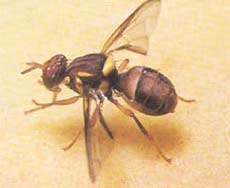 This is definitely the time of year when fruit fly prevention should be on every gardener's mind, especially those
who are hoping to harvest delicious fresh fruit and vegetables. Green Harvest believes only an organic solution
will do, because contaminating your fresh produce with systemic insecticides seems to defeat the whole purpose
of growing your own!
This is definitely the time of year when fruit fly prevention should be on every gardener's mind, especially those
who are hoping to harvest delicious fresh fruit and vegetables. Green Harvest believes only an organic solution
will do, because contaminating your fresh produce with systemic insecticides seems to defeat the whole purpose
of growing your own!
Here are some questions to consider when deciding on a fruit fly control strategy:
 Exclusion
An easy 'set and forget' method. By installing exclusion products such as covers, bags or sleeves as soon as the fruit is set, you put in place a simple but effective barrier against the egg-laying female fruit fly. This will suit gardeners with a home garden to protect with fruit within reach.
Trap
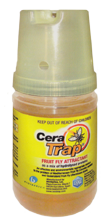
Preventing female fruit flies from laying eggs is fundamental to achieve your aim of luscious, ripe, home grown fruit. Fruit fly products, other than the highly undesirable blanket spraying of a systemic chemical, generally are effective for either male or female flies, not both. The exception to this is the newly released Cera Trap which is effective for both. The Cera Trap uses an organic fruit fly bait.
More information on organic fruit fly control
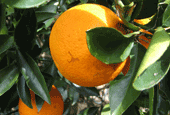 Prune citrus lightly after all danger of frost has passed. Pruning is only
necessary to remove dead-wood and keep the centre of the tree open and branches from crossing. Always remove
shoots or suckers from below the graft as soon as possible, as they steal vigour from the tree and if left too
long, leave large wounds for disease to enter when they are cut. Raising the 'skirt' so that foliage does not
touch the ground will make fertilising and mulching jobs easier. To 'skirt' a tree, remove low shoots so that
the lower edge of the canopy is 60 cm clear of the ground. Citrus trees are very hungry feeders with high
requirements for trace elements; regularly spray with a seaweed fertiliser
such as Natrakelp or
Seaweed Plant Starter. Apply
Life Force Gold, a balanced general-purpose plant
food enhanced with mycorrhizal fungi and Trichoderma fungi to boost plant growth, health and disease resistance.
Prune citrus lightly after all danger of frost has passed. Pruning is only
necessary to remove dead-wood and keep the centre of the tree open and branches from crossing. Always remove
shoots or suckers from below the graft as soon as possible, as they steal vigour from the tree and if left too
long, leave large wounds for disease to enter when they are cut. Raising the 'skirt' so that foliage does not
touch the ground will make fertilising and mulching jobs easier. To 'skirt' a tree, remove low shoots so that
the lower edge of the canopy is 60 cm clear of the ground. Citrus trees are very hungry feeders with high
requirements for trace elements; regularly spray with a seaweed fertiliser
such as Natrakelp or
Seaweed Plant Starter. Apply
Life Force Gold, a balanced general-purpose plant
food enhanced with mycorrhizal fungi and Trichoderma fungi to boost plant growth, health and disease resistance.
Fertilise citrus in early spring, a one-year-old tree will need 4 to 8 kg of well-rotted animal manure, a mature tree will need between 20 and 40 kg. Apply fertiliser to moist ground then mulch well, keeping the mulch and manure well clear of the trunk to avoid collar-rot. Spread fertiliser as evenly as possible to just past the drip-line of the tree.
Check in August for Citrus Gall Wasp which causes swellings on the twigs of lemons and grapefruits; prune off and burn immediately.
Citrus Leaf Miner causes ugly distorted leaves with silvery trails in the leaf tissue. The Citrus Leaf Miner Trap uses a sticky pad with a pheromone lure to trap the male citrus leafminer moth. Eco-Oil controls and inhibits the landing on the leaves by female moths. Spray when new growth is about 1 cm long, reapply every 2-3 weeks. October and February are crucial times to spray.
Band citrus trees with Tree Guard Glue or Fruit Tree Grease Bands to keep ants and other crawling pests out. Ants farm and protect aphids and scale, so keeping ants out of a tree is an effective way to reduce attacks of these pests, as well as incidence of sooty mould growing on the honeydew they secrete.
 Nematodes or eelworms affect the growth of a wide
range of plants, including rose, silverbeet, potato, carrot, tomato, lettuce and zucchini. They are tiny creatures
that burrow into the roots of your plants and stimulate the development of galls, or lumps on the roots. The infected
plants are stunted and they wilt rapidly in hot weather. On potatoes they can cause wart-like lesions on the skin.
Nematodes are a particular problem for gardeners with sandy soils and in humid areas. When harvesting infected plants
it is important to remove as much infected root from the soil as possible, as nematode eggs can hatch out of the roots
as they decompose. Do not place the infected roots in a compost heap at it is unlikely to get hot enough to kill the
eggs. Instead if your garden is big enough place the damaged plant material under a native tree or shrub that is
unlikely to be a host plant for the nematode, so that they starve. In a small garden you may need to put the plant
material into the garbage.
Nematodes or eelworms affect the growth of a wide
range of plants, including rose, silverbeet, potato, carrot, tomato, lettuce and zucchini. They are tiny creatures
that burrow into the roots of your plants and stimulate the development of galls, or lumps on the roots. The infected
plants are stunted and they wilt rapidly in hot weather. On potatoes they can cause wart-like lesions on the skin.
Nematodes are a particular problem for gardeners with sandy soils and in humid areas. When harvesting infected plants
it is important to remove as much infected root from the soil as possible, as nematode eggs can hatch out of the roots
as they decompose. Do not place the infected roots in a compost heap at it is unlikely to get hot enough to kill the
eggs. Instead if your garden is big enough place the damaged plant material under a native tree or shrub that is
unlikely to be a host plant for the nematode, so that they starve. In a small garden you may need to put the plant
material into the garbage.
There are a range of actions you can take to control the nematodes, some of which may have undesirable consequences. Digging fresh chicken manure into a hot, dry soil, something normally to be avoided, has been shown to reduce nematode numbers. Leave the soil undisturbed for at least 3 weeks. Drenching with water, molasses or sugar can also kill nematodes, but will have a negative impact on the earthworms.
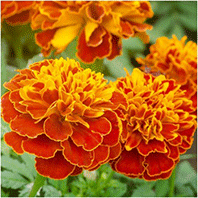
The best organic strategy is biofumigation - using decomposing plants to produce gases that kill nematodes. The most effective plants to do this are marigolds and BQ Mulch. The old gardening adage that marigolds stop nematodes is unfortunately only partly true - to have a significant effect, the marigolds must be chopped up and dug through the soil. The same applies to BQ Mulch, a dwarf brassica. Once incorporated into the soil, the plants release a bio-fumigant gas as they break down.
Soil solarization is also very effective for both nematode and weed control. To do this successfully lay clear plastic sheets on moist soil during the warmer months. The plastic must be pulled tight as close to the soil surface as possible with the edges buried. The aim is to keep the heat in. Leave in place for a minimum of six weeks.
More information on organic nematode control
 Salad mixes, mesclun, baby leaf and microgreens are new terms for many gardeners although they have been available
in supermarkets as a packaged salad item for many years. So what are they and are they worth growing in the home
garden?
Salad mixes, mesclun, baby leaf and microgreens are new terms for many gardeners although they have been available
in supermarkets as a packaged salad item for many years. So what are they and are they worth growing in the home
garden?
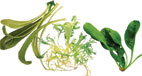
Salad Mixes, 'baby leaf' or 'mesclun' are mixtures of green, leafy vegetables grown in a seedbed and picked by removing the outside leaves at a 'baby leaf' stage. Salad mixes or 'mesclun' were originally French; the name comes from the word mescla, which means 'to mix' in the local dialect of Nice. The idea was to make a salad that includes every taste and texture sensation: bitter, sweet, tangy, crunchy and tender. The original recipe was a combination of early shoots of rocket, dandelion greens and lettuce. Other ingredients in a mix might include chicories (syn. radicchio), beetroot greens, asian greens (tatsoi, mizuna), spinach, kale, and mustard greens.
Information on growing salad mix
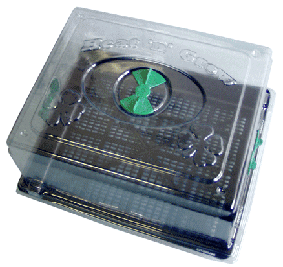 After a very cold winter, we are looking forward to a productive spring in the garden. In frosty areas like ours,
it will be too cold to put out frost-tender seedlings until mid-September. Keep a garden diary so that you have a
record of the last frost for the year, to help next year's planning, as it can be very disappointing to have
seedlings burnt to a crisp that you have lovingly raised. We like to get an early start with many spring
vegetables, especially tomatoes, by starting them in a warm spot ahead of time. We use
Mini Propagators for this and a heated propagator tray,
but the top of a hot water system or a sunny spot on a veranda works well. Remember to use a good quality
seed-raising mix as it has the necessary aeration to allow seeds to germinate successfully.
After a very cold winter, we are looking forward to a productive spring in the garden. In frosty areas like ours,
it will be too cold to put out frost-tender seedlings until mid-September. Keep a garden diary so that you have a
record of the last frost for the year, to help next year's planning, as it can be very disappointing to have
seedlings burnt to a crisp that you have lovingly raised. We like to get an early start with many spring
vegetables, especially tomatoes, by starting them in a warm spot ahead of time. We use
Mini Propagators for this and a heated propagator tray,
but the top of a hot water system or a sunny spot on a veranda works well. Remember to use a good quality
seed-raising mix as it has the necessary aeration to allow seeds to germinate successfully.
For more information on Successful Seed Raising.
A great benefit of raising seeds yourself is you have such an enormous range to choose from compared to bought seedling punnets.
For those of you who have to deal with frosted gardens, remember that spraying a seaweed fertiliser such as Natrakelp will help reduce damage to frost-tender plants. Even though frost-burnt foliage is unsightly, resist the desire to cut it off until all danger of frost is past.
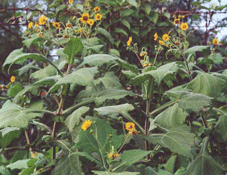
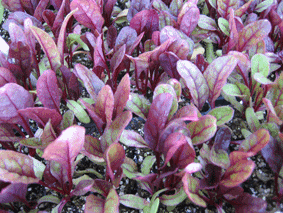 We have all planted a whole punnet of vegetable seedlings only to find that they mature at the same time and then
we have a glut for a few weeks then nothing left to harvest. Succession planting is a strategy to ensure we have
continuous bounty from the garden all year round.
We have all planted a whole punnet of vegetable seedlings only to find that they mature at the same time and then
we have a glut for a few weeks then nothing left to harvest. Succession planting is a strategy to ensure we have
continuous bounty from the garden all year round.
July And August
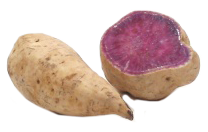 Delicious, nutritious sweet potatoes are excellent staples for the vege garden. This trailing vine is a vigorous
grower with attractive, lobed leaves and pink morning-glory type flowers. The tubers have a low GI and high levels
of vitamins A and C. Sweet potatoes suffer fewer pests and diseases problems than 'regular' potatoes.
Delicious, nutritious sweet potatoes are excellent staples for the vege garden. This trailing vine is a vigorous
grower with attractive, lobed leaves and pink morning-glory type flowers. The tubers have a low GI and high levels
of vitamins A and C. Sweet potatoes suffer fewer pests and diseases problems than 'regular' potatoes.
Tubers and Slips
The tubers can be planted directly in the soil but it is better to produce sprouts or 'slips' that are then planted out. To start your own slips, place the tubers on a raised bed or in a box in a warm, sheltered spot. Cover the tubers with 5 cm of damp sand and when the shoots are 15 cm long, gently twist them off the tuber (rootlets should have formed at the base of the slip) and plant out immediately. Plants raised from slips generally store better and are relatively free of disease. One tuber can produce up to ten plants! Plant the tubers or slips 20 cm apart at the beginning of the warm weather.
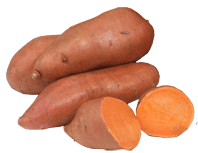
Sweet potatoes do well in both sandy and loamy soils with a pH of 5.2 - 6.7; they need good drainage. The area should be frost-free for at least five months with warm days and nights. Planting sweet potatoes in a different area of the garden each year will reduce the incidence of disease. Sweet potatoes can be a useful and decorative groundcover in frost-free permaculture orchards; however, if you live in an area with an abundance of wildlife, this is unlikely to be successful as bandicoots, brush turkeys and wallabies will all eat them. Tubers are ready to harvest when the vines die back in late autumn. Excavate carefully to avoid damaging the skin; start a fair way back from the leaf stem. Tubers can be stored for many months in a cool, dry place.
Young leaves and tips can be steamed as a spinach substitute. The tubers are delicious: try baked sweet potato soup, sweet potato chips or mash. They are also great in fritters and vege bakes.
Disease-free Sweet Potato tubers for planting are available from September to October.
Delicious, Home-Grown Asparagus
Dedicate a garden bed to asparagus and be rewarded with delicious spears for up to 20 years!The sweetness of a freshly-picked, crunchy, home-grown asparagus spear is a taste sensation. An easy to grow, long-lived plant, it thrives in a wide climatic range, from temperate, through to maritime and subtropical zones.
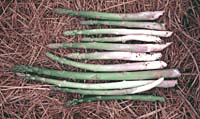
Asparagus is a member of the lily family - the delicious spears are the new stems emerging in spring. The plants respond well to good drainage and lots of feeding. Asparagus is bothered by few pests or diseases but some protection of the young shoots from slugs and snails is a good idea. Plant the crowns on mounds in a 40cm deep trench dug in a bed that has been enriched with well-rotted manure. Two-year-old crowns will give you a few spears within months. Our rule of thumb is to pick spears that are thicker than a pencil and leave the skinnier ones. If not cut and picked for eating, the stems will grow up to 1.5m long with feathery, fern-like foliage. These photosynthesise and feed the crown; the following spring, the crown and the spears that emerge from it will be bigger and better! You may need to support the long, slender stems with wire or string from poles at either end of the asparagus bed. In winter, they'll start to turn brown and die off. Time to cut the stems to ground level, then fertilise and mulch the bed, ready for the new season's growth. Once you have harvested a bumper crop, lightly steam a handful of spears and serve with a poached egg and hollandaise sauce for a light, delicious spring supper.
Hollandaise Sauce
Have you been put off by the time consuming method using a whisk and double saucepan? Try this, it takes only
minutes to make in a blender!
- 125g butter (4 ozs)
- 2 egg yolks
- 1 tablespoon lemon juice
- salt to taste
- fresh herbs
Attract Insect-Eating Birds To Your Garden
Birds add a lot to our lives with their bright flashes of colour and morning song. It is hard to imagine living
somewhere the smaller, shrub-living birds are not part of the environment, but sadly this is becoming the norm
in many urban areas and large, cleared areas of farmland. Birds need to be considered as essential residents of
any organic garden or farm. The robins, wrens, honeyeaters, pardalotes (pictured), willy wagtails, thornbills,
flycatchers, warblers and tree-creepers are primarily insect eaters and do an enormous amount of pest control,
particularly of aphids,
scale,
caterpillars and
grasshoppers.These insect eaters are mainly smaller, shrub-dwelling birds who need protection from their predators, including cats and hawks. People who allow their cats free range in the garden will often claim they still have birds but nearly always they only have the larger tree dwelling birds like kookaburras, crows, magpies and currawongs. Fitting any cats with multiple, small bells, or a mirrored collar, helps to prevent decimation of the wildlife population, as does restricting their wandering.
To attract birds provide safe nesting sites, free from predators and with privacy. Dense plantings of native shrubs,
in out-of-the-way corners of the garden will provide important nesting sites for smaller birds, and as a bonus, can
be chosen to provide nectar to attract nectar feeding birds such as Honeyeaters.Including prickly shrubs in the plantings gives added protection from cats. On farms designing a hedgerow of bird-attractant shrubs between cropping areas will provide a range of benefits. In an urban landscape nesting sites for birds that require hollow trees are few and far between. It can take 150 years for a tree to develop a hollow large enough to house owls, parrots, gliders, possums and small insect eating bats. Provision of nesting boxes by urban residents can meet an urgent need and help to maintain a rich diversity of wildlife.
Small, insectivorous bats are nocturnal feeders, and play an important role in the control of night flying insects, including mosquitoes. Sugar Gliders mainly eat insects, such as leaf-eating beetles, moths, grasshoppers and caterpillars, they also feed on sap-suckers that excrete honeydew, such as scale. Water is an essential element in the landscape, whether it is a bird bath or a small pond. Providing a reliable source of water for birds allows them to nest in the garden. Bird baths should be placed close to a nearby refuge of densely foliaged shrubs, to allow easy escape from predators.
Information on design for pest balance.
Growing Delicious Tomatoes
Growing your own tomatoes and harvesting the sun-warmed, aromatic, fully ripe fruit is one of the great rewards of
gardening.Nothing compares with the taste of a home-grown tomato. Choose an heirloom variety such as 'Green Zebra' with its sweet and tangy, chartreuse flesh and great flavour; or try the sweet and popular 'Cherry Cocktail'. Tomatoes are self-pollinating, so you can have several varieties growing at once and save the seed for the next season. Follow the Successful Seed Raising Guide provided on our website. When it is time to transplant, plant the seedlings deeply, first removing the seed leaves and planting up to the 1st set of true leaves. This expands the root area and speeds maturity. Keep the plants growing vigorously and disease at bay with regular applications of Natrakelp seaweed fertiliser or Seaweed Plant Starter.
If you suspect fruit fly will be a problem, an effective and easy organic solution is to simply cover the fruit with a PestGuard Bag. Or you could create a fruitfly-free zone within your garden by erecting a frame using our new Build A Frame pack and covering it with a Vege Net. Tomatoes don't need insects for pollination so can be covered with a net or bag as soon as blossoms have formed.
Determinate or Indeterminate
Determinate tomatoes such as 'Thai Pink Egg' and 'Roma San Marzano' are also known as 'Bush' types. They grow to between 0.9 - 1.2 m tall and usually don't require staking. Indeterminate tomatoes or 'Climbing' types usually grow between 1.8 - 2.4 m tall and need staking. Height can be reduced by pruning or by tying the tomato bush to a stake 1.5 m high, then allowing additional growth to just flop over.
Once you have harvested a bumper crop, preserving either as chutney, sauce or semi-dried will mean you can enjoy your tomatoes for many months.
Spicy Tomato Chutney
- 2 tablespoons oil (to fry spices)
- 30 - 40 chillies, finely chopped; very mild ones (or 3-6 Birdseye)
- 20 cloves garlic, finely chopped
- 250g fresh ginger, finely grated or chopped
- 5kg tomatoes, peeled and chopped
- 6 tablespoons ground cumin
- 2 tablespoons turmeric
- 2 tablespoons black mustard seeds
- 4 cups cider or brown vinegar
- 3 tablespoons salt
- 3 - 5 onions, chopped
- 3 cups sugar
- 2 large green apples (optional)
Net Profit: Exclude fruit bats and birds and enjoy more of your crop
Gardeners and farmers the world over compete with wildlife to harvest their crops. The ideal of tree-ripened fruit
can be a real challenge to achieve! Exclusion is an organic, environmentally sustainable and cost effective method
of discouraging birds and fruit bats from raiding your fruit trees.
When should nets be in place?
The earlier the better; as soon as possible after fruit is set. Drape the netting directly over the tree and secure it to the ground or around the trunk. Alternatively, build a lightweight polypipe or bamboo frame for the netting; this will improve air circulation and improve access to the fruit.
Bird Control Net: This durable, knitted, commercial netting can be re-used for many years. The net is a diamond shape with 16 mm holes. Available in black or white in three sizes: 5 x 5 m, 5 x 10 m and 10 x 10 m. When using netting the Australian Bat Conservation Society recommends that you avoid thin nylon/monofilament netting and that the netting used is stretched taut over a frame, with a mesh size less than 40 mm.
Container Growing
Container growing is ideal for gardeners with limited space but is also an excellent alternative where soil is poor or hard to work with or where pests or the elements make gardening difficult. Large pots, grow bags and hanging planters are all suitable for your container garden and can house salad greens, herbs, potatoes, strawberries and much more. Choose a good-quality potting mix, ensure adequate drainage and fertilise regularly; a seaweed-based fertiliser such as Natrakelp or Seaweed Plant Starter is ideal. Plants can be relocated according to weather conditions and are easily protected from pests with exclusion fabrics such as a Vege Net. A portable salad or herb garden near the kitchen door will provide you with the freshest ingredients possible!
Fungal Disease In The Vege Garden
Plants that appear less than healthy and exhibit symptoms such as spots on foliage, fluffy grey fungal growth, powdery white patches, yellow or orange pustules under leaves or the plant yellowing, stunted or wilting could be suffering from a fungal disease.
Black spot, powdery mildew, downy mildew, Botrytis (Grey mould), Anthracnose, rust, Fusarium wilt and damping off are all fungal diseases that can have devastating effects in your garden. They affect a wide range of vegetables and fruit but there are strategies you can employ to minimise their occurrence, spread and impact.
Garden Design and Plant SelectionThe overall design of your garden plays an important part in creating and maintaining 'garden health'. Make sure that the soil is well drained and that airflow is good. Selecting the plants most suited to your area, whether ornamentals, vegetables or fruit trees will reward you with minimal disease problems. If you live in an area with hot, humid summers then it makes sense to select plants that have developed in these areas; most European vegetables have an Asian equivalent that is likely to be more disease resistant. So try substituting snake beans for French beans, angled luffa (pictured) or New Guinea Bean for zucchini, Ceylon spinach (pictured) for silverbeet and so on.
The simplest strategy of all, however, is to always remove a sick looking plant and destroy it. This is putting the overall health of the garden above that of an individual plant?s survival.
Watering
Keep water off the leaves as much as possible, by watering from below. Fungal spores are often spread by water droplets. Most fungal spores need to be immersed in water for a number of hours in order to germinate; black spot for example needs to be constantly moist for 7 hours to establish. If you have to overhead water, do it early in the day to allow leaves to dry off.
Crop RotationUse long crop rotations of 3 to 5 years. It is important to remember to rotate the plant family, not just the individual vegetable. Getting the timing right can also reduce disease problems; avoid planting vegetables prone to rust, powdery or downy mildew just prior to periods of expected high humidity.
Soil Health
Plant health is as dependent on the soil as our own health is on what we eat. Pay attention to feeding the soil and its micro-fauna; just as many pests are controlled in an organic garden by predatory insects, so many diseases are controlled by a diverse and abundant soil life. Increase the organic matter by composting, green manuring and mulching. Mulching acts as a barrier and helps restrict the spread of fungal spores from the soil onto the plant. Trace elements are critical to plant health; seaweed is a good way to add these essential nutrients - try Natrakelp. Avoid high nitrogen fertilisers, especially in summer when fungal problems are at their height, as soft new growth is very vulnerable to disease.
Golden rule: Stay out of the garden when it is wet.
Garlic Harvest
Spring is garlic harvest time in most parts of Australia - time to lift, dry, store and enjoy your crop.
Garlic usually takes about 8 months to produce a bulb. When
the bulbs are ready to lift, the tops will begin to turn brown; don't wait until the tops have completely died
back. Treat the bulbs gently as bruised bulbs do not store well. Hang the whole plant in bunches, or spread on
racks, and allow to dry undercover for 2 to 3 weeks. The skins will then become papery and dry. If you're feeling
dexterous, try plaiting the garlic (soft-neck types only). Alternatively, remove the leaves and roots, to store
on racks or in net bags. Good air circulation is essential. Bulbs keep better stored whole, not separated into
cloves.
Garlic does best in light, well-drained soil and likes full sun. It can fail to thrive in humid conditions and it is not unusual for gardeners in the subtropics to lose some of their crop because of excessive moisture. Improve the soil by adding compost or well-rotted animal manures before planting; make sure that you don't use fresh manure as it can prove disastrous for garlic, increasing its susceptibility to disease. Mulch well, as garlic dislikes competition from weeds. Regular watering is important, do not allow the soil to completely dry out during bulb formation. Stop watering once the tops brown.
Hard-Neck and Soft-Neck Garlic
Hard-neck varieties of garlic do best in cooler climates. They produce attractive flower stalks that curve and curl before producing a flower. Purple Monaro is a rocambole type and hard-neck.
Soft-neck varieties tend to do better in warmer climates; they have no flower stalk. Their flavour is spicier, the bulbs keep better and they can be plaited for storage. Soft-neck varieties include Glen Large and Italian White.
Planting
The main garlic planting time in Australia is March - April. Varieties to suit each climate zone will be available from Green Harvest starting from January 2014. Visit our Edible Plants shop on the website to enter your email address and receive priority notification of garlic varieties becoming available.
Sopa de Ajo - Garlic Soup
This Peruvian speciality is a hearty, delicious soup, ideal for warding off winter chills.
- 3 tablespoons olive oil
- 5 cloves garlic, thinly sliced or crushed
- 3 tablespoons smoked paprika
- 3 tomatoes, finely chopped
- 1.5 litres hot chicken stock
- 6 eggs
- 6 slices crusty white bread, crusts removed, roughly crumbled
Heat oil in a large saucepan over medium heat. Add garlic and paprika, and cook, stirring, for 3 minutes. Add tomatoes and cook for a further 3 minutes or until softened. Add bread and stir until well combined. Stir in 250ml stock and cook, stirring, for 1 minute or until almost absorbed. Repeat with another 250ml stock, then add remaining 1L stock and bring to the boil. Reduce heat to low and cook, stirring occasionally, for 15 minutes until thickened.
Preheat oven to 160°C. Season soup with salt and pepper, and spoon into 6 ovenproof 10 cm deep bowls. Break an egg in the centre of each and place in the oven. Cook for 10 minutes or until egg white has set and yolk is cooked as desired.
Fruit Fly - You Can Beat It!
This is definitely the time of year when fruit fly prevention should be on every gardener's mind, especially those
who are hoping to harvest delicious fresh fruit and vegetables. Green Harvest believes only an organic solution
will do, because contaminating your fresh produce with systemic insecticides seems to defeat the whole purpose
of growing your own!Here are some questions to consider when deciding on a fruit fly control strategy:
- Are you a home gardener with just a few plants or trees to protect?
- Is the fruit up very high, or easy to reach?
- Are you a commercial grower?
- Do you have limited time for managing your plants?
- Is regular weekly spraying an option, or would a 'set and forget' product suit you better?
- Do you also need to protect your fruit from other creatures, such as birds, bats or possums?
ExclusionAn easy 'set and forget' method. By installing exclusion products such as covers, bags or sleeves as soon as the fruit is set, you put in place a simple but effective barrier against the egg-laying female fruit fly. This will suit gardeners with a home garden to protect with fruit within reach.
Trap
Preventing female fruit flies from laying eggs is fundamental to achieve your aim of luscious, ripe, home grown fruit. Fruit fly products, other than the highly undesirable blanket spraying of a systemic chemical, generally are effective for either male or female flies, not both. The exception to this is the newly released Cera Trap which is effective for both. The Cera Trap uses an organic fruit fly bait.
More information on organic fruit fly control
Spring Citrus Care
Prune citrus lightly after all danger of frost has passed. Pruning is only
necessary to remove dead-wood and keep the centre of the tree open and branches from crossing. Always remove
shoots or suckers from below the graft as soon as possible, as they steal vigour from the tree and if left too
long, leave large wounds for disease to enter when they are cut. Raising the 'skirt' so that foliage does not
touch the ground will make fertilising and mulching jobs easier. To 'skirt' a tree, remove low shoots so that
the lower edge of the canopy is 60 cm clear of the ground. Citrus trees are very hungry feeders with high
requirements for trace elements; regularly spray with a seaweed fertiliser
such as Natrakelp or
Seaweed Plant Starter. Apply
Life Force Gold, a balanced general-purpose plant
food enhanced with mycorrhizal fungi and Trichoderma fungi to boost plant growth, health and disease resistance.
Fertilise citrus in early spring, a one-year-old tree will need 4 to 8 kg of well-rotted animal manure, a mature tree will need between 20 and 40 kg. Apply fertiliser to moist ground then mulch well, keeping the mulch and manure well clear of the trunk to avoid collar-rot. Spread fertiliser as evenly as possible to just past the drip-line of the tree.
Check in August for Citrus Gall Wasp which causes swellings on the twigs of lemons and grapefruits; prune off and burn immediately.
Citrus Leaf Miner causes ugly distorted leaves with silvery trails in the leaf tissue. The Citrus Leaf Miner Trap uses a sticky pad with a pheromone lure to trap the male citrus leafminer moth. Eco-Oil controls and inhibits the landing on the leaves by female moths. Spray when new growth is about 1 cm long, reapply every 2-3 weeks. October and February are crucial times to spray.
Band citrus trees with Tree Guard Glue or Fruit Tree Grease Bands to keep ants and other crawling pests out. Ants farm and protect aphids and scale, so keeping ants out of a tree is an effective way to reduce attacks of these pests, as well as incidence of sooty mould growing on the honeydew they secrete.
Organic Strategies For Nematode Problems
Nematodes or eelworms affect the growth of a wide
range of plants, including rose, silverbeet, potato, carrot, tomato, lettuce and zucchini. They are tiny creatures
that burrow into the roots of your plants and stimulate the development of galls, or lumps on the roots. The infected
plants are stunted and they wilt rapidly in hot weather. On potatoes they can cause wart-like lesions on the skin.
Nematodes are a particular problem for gardeners with sandy soils and in humid areas. When harvesting infected plants
it is important to remove as much infected root from the soil as possible, as nematode eggs can hatch out of the roots
as they decompose. Do not place the infected roots in a compost heap at it is unlikely to get hot enough to kill the
eggs. Instead if your garden is big enough place the damaged plant material under a native tree or shrub that is
unlikely to be a host plant for the nematode, so that they starve. In a small garden you may need to put the plant
material into the garbage.There are a range of actions you can take to control the nematodes, some of which may have undesirable consequences. Digging fresh chicken manure into a hot, dry soil, something normally to be avoided, has been shown to reduce nematode numbers. Leave the soil undisturbed for at least 3 weeks. Drenching with water, molasses or sugar can also kill nematodes, but will have a negative impact on the earthworms.
The best organic strategy is biofumigation - using decomposing plants to produce gases that kill nematodes. The most effective plants to do this are marigolds and BQ Mulch. The old gardening adage that marigolds stop nematodes is unfortunately only partly true - to have a significant effect, the marigolds must be chopped up and dug through the soil. The same applies to BQ Mulch, a dwarf brassica. Once incorporated into the soil, the plants release a bio-fumigant gas as they break down.
Soil solarization is also very effective for both nematode and weed control. To do this successfully lay clear plastic sheets on moist soil during the warmer months. The plastic must be pulled tight as close to the soil surface as possible with the edges buried. The aim is to keep the heat in. Leave in place for a minimum of six weeks.
More information on organic nematode control
Salad Mixes
Salad mixes, mesclun, baby leaf and microgreens are new terms for many gardeners although they have been available
in supermarkets as a packaged salad item for many years. So what are they and are they worth growing in the home
garden?Salad Mixes, 'baby leaf' or 'mesclun' are mixtures of green, leafy vegetables grown in a seedbed and picked by removing the outside leaves at a 'baby leaf' stage. Salad mixes or 'mesclun' were originally French; the name comes from the word mescla, which means 'to mix' in the local dialect of Nice. The idea was to make a salad that includes every taste and texture sensation: bitter, sweet, tangy, crunchy and tender. The original recipe was a combination of early shoots of rocket, dandelion greens and lettuce. Other ingredients in a mix might include chicories (syn. radicchio), beetroot greens, asian greens (tatsoi, mizuna), spinach, kale, and mustard greens.
Information on growing salad mix
Seed Sowing
After a very cold winter, we are looking forward to a productive spring in the garden. In frosty areas like ours,
it will be too cold to put out frost-tender seedlings until mid-September. Keep a garden diary so that you have a
record of the last frost for the year, to help next year's planning, as it can be very disappointing to have
seedlings burnt to a crisp that you have lovingly raised. We like to get an early start with many spring
vegetables, especially tomatoes, by starting them in a warm spot ahead of time. We use
Mini Propagators for this and a heated propagator tray,
but the top of a hot water system or a sunny spot on a veranda works well. Remember to use a good quality
seed-raising mix as it has the necessary aeration to allow seeds to germinate successfully.For more information on Successful Seed Raising.
A great benefit of raising seeds yourself is you have such an enormous range to choose from compared to bought seedling punnets.
For those of you who have to deal with frosted gardens, remember that spraying a seaweed fertiliser such as Natrakelp will help reduce damage to frost-tender plants. Even though frost-burnt foliage is unsightly, resist the desire to cut it off until all danger of frost is past.
Seed Storage
The best place to store seed is in a sealed container in your fridge. Seed stored in a hot garden shed or garage that can reach temperatures greater than 40°C in summer will simply die. Seed stored open to the air where it can take up moisture will lose viability.
The best place to store seed is in a sealed container in your fridge. Seed stored in a hot garden shed or garage that can reach temperatures greater than 40°C in summer will simply die. Seed stored open to the air where it can take up moisture will lose viability.
Sowing And Planting Guide
- Early spring is a good time to plant perennial food plants such as yacon, asparagus, Jerusalem artichokes, waterchestnuts, ginger, turmeric, galangal and chokos. Potatoes can be planted into well-mulched beds; only use certified seed potatoes to avoid introducing damaging viral diseases to your garden.
- Sow seeds or plant seedlings of herbs such as basil, coriander, cress, borage, catnip, chamomile, chives, dill, lemon balm, sweet marjoram, Mexican tarragon, peppermint and sage. In temperate areas, sow parsley and thyme.
- Plant flower seedlings and sow seeds of sweet alice, cosmos, marigolds, phlox, salvia, nasturtiums, sunflowers, snapdragons, Queen Anne's lace, verbena and statice. In temperate areas, sow seeds of the beneficial insect-attracting Phacelia.
- In subtropical areas, sow vegetable seed or plant seedlings of broccoli, corn, Chinese cabbage, capsicum, carrots, parsnip, cabbage, silverbeet, lettuce, radish, rosella, beetroot, rocket, tomatoes, eggplant and spring onions; all these can be planted now. Plant carrots and parsnips from seed only; root vegetables should not be transplanted.
- In temperate to cool zones, early spring is time to put in vegetable seed or seedlings of silverbeet lettuce, radish, spring onions, carrots, cabbage, beans and beetroot. After all danger of frost has passed, plant out corn, cucumbers, capsicum, cape gooseberries, eggplant, okra, zucchini, rosella, squash, watermelon, tomatillo and tomatoes. Soil temperatures need to be around 20°C to germinate seeds of warm season vegetables. To check, see if pumpkin seeds are germinating by themselves from old compost; if so, then the soil is warm enough. Sow larger seeds such as beans, pumpkins, melons and corn directly in the ground. Remember that corn is wind-pollinated and needs to be grown in a block, not a row, for pollination to be effective.
Harvest All Year Round
We have all planted a whole punnet of vegetable seedlings only to find that they mature at the same time and then
we have a glut for a few weeks then nothing left to harvest. Succession planting is a strategy to ensure we have
continuous bounty from the garden all year round.
- While garden beds are being prepared for new plantings, look for fast turn-around plants to provide an early harvest. Start by growing sprouts or microgreens to quickly produce some salad greens. Microgreens are halfway between a sprout and salad leaf size. They can be grown in seedling trays and harvested when there are 4 or more leaves. Try seeds such as peas, rocket and lettuce for a quick harvest. Many types will regrow and can be cut several times. You might want to download the Sprouting and Microgreens Leaflet (513KB).
- Next plant long-lived vegetables like silverbeet, kale, eggplant, chicory 'Red Dandelion', chives, Welsh onions, leeks, cherry tomato, parsley and broccoli which can all be harvested over many months. They are planted only once or twice to provide a long harvest over the growing season. Don't pull out leeks and spring onions to harvest; cut off above the roots and they will reshoot, saving the time and effort of continuous planting. Plant asparagus in a dedicated bed and they can produce for over 20 years.
- Then aim to plant veges that give multiple harvests. The young leaf tips and immature fruit of pumpkins and choko are edible as are sweet potato leaf tips; paw paws can be eaten green as a steamed vegetable or in curries and salads.
- Remember to plant lettuce and leafy greens regularly. Start harvesting the leaves of salad bowl lettuce, rocket, tatsoi, mizuna, kale, chicory when very young, instead of pulling the whole plant. Plant close together and when half grown, start picking to thin out and let the others grow. Some greens mature in as little as 4 weeks, so plant more every 3 to 4 weeks over the growing season.
- Plant different varieties of beans or tomato at the same time to give a longer cropping season. Dwarf beans will crop heavily and faster than climbing beans, which will crop slower but produce over a longer time. Pick daily to encourage flowering. As they start to flower, sow another crop. Cherry tomatoes will ripen quicker than the larger tomato types; 2 plantings over the growing season will ensure continuous cropping.
- Grow plants that store well, such as potato, sweet potato, ginger and pumpkin. They're slow to mature but only need to be planted once a year. Potatoes can be planted twice a year in Qld in autumn and spring.
- Root crops like beetroot and carrot take about 12 weeks to mature. To ensure a long harvest period they should be planted out every 4 - 6 weeks.
- Harvest vegetables like zucchini and squash while still small to encourage continuous production over the growing season.
- Spring in the tropics and subtropics is the time to think about seasonal succession. Tropical vegetables planted in spring thrive in the hot and humid conditions over summer. Beans can be replaced with snake beans or winged beans. Ceylon spinach, kang kong, Egyptian, Brazillian and Surinam Spinaches can be substituted for silverbeet and leafy greens in a salad or stir fry. Potatoes can be replaced with other starchy tubers such as sweet potato, cassava and arrowroot; angled luffa can be harvested young and used like zucchini. Try growing ginger, turmeric, yacon and rosellas; they require minimal care and will provide a harvest over the summer and into autumn.
- Grow plants in season that suit your local rainfall and temperature conditions; select the best varieties for your area. Other varieties may still grow but they may be a lot slower to mature, take up valuable space and may be more prone to pests and diseases.
Garden Calendar
July And August
- Now is the time to prune deciduous fruit trees. Ensure that your tools are sterilised by cleaning blades in a disinfectant such as tea tree oil to control the spread of disease.
- Bananas need management, including regular removal of suckers, to produce good-sized bunches. Each clump of bananas should be made up of a mature plant, a half-grown plant and one sucker only. Allowing all the suckers to grow will mean that bunches are either small or non-existent. Preference in sucker selection should be given to those with spear-shaped rather than round leaves and on the side of the plant that you wish the clump to move in. Fertilise after the emergence of the first new suckers and again 8 weeks later. Mulch well. Tidy the plant by removing yellowing, old leaves and if a bunch has developed, remove the flower bell. The flower bell drips nectar and attracts possums and bats, it also uses nutrients better saved for the fruit. Banana bags help fruit ripen and keep the birds away.
- Give leafy crops a regular foliar feed in the morning with Natrakelp.
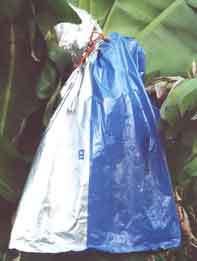
- If your peach or nectarine trees had peach-leaf curl last year, they will need to be sprayed with Lime Sulphur before the buds swell. Once fruit have formed, thin fruit to one peach per node and bag the fruit with Stone Fruit Bags or Mesh Sleeves to protect from fruit fly.
- Make sure fruit fly traps are in place by late August: Cera Traps will attract and kill male and female Mediterranean and Queensland fruit fly.
- Establish a water garden by recycling old laundry tubs to grow edibles such as waterchestnuts and watercress.
- In temperate and sub-tropical zones prepare site for asparagus crowns which can be planted late winter/early spring. Asparagus needs good drainage and lots of feeding.
- Sow tomatoes indoors, ready to plant out once the soil is warmer. 'Cherry Red Pear' and 'Green Zebra' are high-yielding, colourful varieties.
- Divide Queensland Arrowroot to increase the quantities you have of this useful plant. Our fruit trees have a semi-circle of Arrowroot planted a few metres below each one, to make mulching the trees quick and easy. This also traps any down-slope movement of soil and nutrients.
- Established passionfruit vines should be fertilised in early spring, use up to 1 kg of blood and bone with 100g of sulphate of potash added, spread onto moist soil and mulch well.
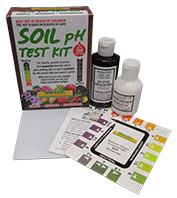
- Test the pH; excessive acidity or alkalinity will interfere with uptake of nutrients by plants. Remember never to apply lime at the same time as fertilisers as this leads to a loss of nitrogen, caused by it converting to ammonia and off-gassing. Allow 3 weeks between liming and fertiliser applications. Never add lime to a compost heap as this also leads to a large loss of nutrient into the atmosphere.
- A wide range of fertilisers is available, with the word 'organic' being used rather freely. A good choice for the home gardener is Life Force Gold plant food. Use up to 200g to the square metre in the vegetable garden; water in to activate.
- Weed control starts now, keep any bare ground mulched. In orchards, get rid of all household paper scraps by soaking in water prior to spreading on the ground. Cover with at least 5 sheets of newspaper or flattened cardboard boxes. Cover this with mulch.
- Fertilise pawpaws (up to 1 kg of pelleted poultry manure per m2). If your soil is boron deficient, add 5 g to the mix; pawpaws need plenty of boron. Green pawpaws can be eaten as a vegetable. They make a good substitute for squash in a curry and are delicious made into a salad.
- Plant flowers to attract beneficial insects for biological control, or try our Good Bug Mix.
- Plant a green manure crop of millet and cowpea in any unoccupied beds to improve the soil for mid-summer planting.
- Put least-toxic Eradicate Snail and Slug Bait out in containers close to young seedlings.

- Plant seed or seedlings for Christmas dinner: colourful, open-hearted lettuces like Brown Romaine (great for Caesar salads), beans, 'Ronde De Nice' squash and cherry tomatoes.
- Train vines regularly. Plant a new passionfruit, as they only last a few years before succumbing to Woody Passionfruit Virus.
- Watch for aphids on soft shoots of citrus and roses, check for beneficial insects such as Hoverflies and Ladybeetle larvae before controlling them. If some of the aphids look like little brown balloons, they have been parasitised by a micro-wasp. Spray Natrasoap as a least toxic control in the absence of predators.
- Prune spring-flowering shrubs when flowering finishes.
Growing Sweet Potato
Delicious, nutritious sweet potatoes are excellent staples for the vege garden. This trailing vine is a vigorous
grower with attractive, lobed leaves and pink morning-glory type flowers. The tubers have a low GI and high levels
of vitamins A and C. Sweet potatoes suffer fewer pests and diseases problems than 'regular' potatoes.
Tubers and Slips
The tubers can be planted directly in the soil but it is better to produce sprouts or 'slips' that are then planted out. To start your own slips, place the tubers on a raised bed or in a box in a warm, sheltered spot. Cover the tubers with 5 cm of damp sand and when the shoots are 15 cm long, gently twist them off the tuber (rootlets should have formed at the base of the slip) and plant out immediately. Plants raised from slips generally store better and are relatively free of disease. One tuber can produce up to ten plants! Plant the tubers or slips 20 cm apart at the beginning of the warm weather.
Sweet potatoes do well in both sandy and loamy soils with a pH of 5.2 - 6.7; they need good drainage. The area should be frost-free for at least five months with warm days and nights. Planting sweet potatoes in a different area of the garden each year will reduce the incidence of disease. Sweet potatoes can be a useful and decorative groundcover in frost-free permaculture orchards; however, if you live in an area with an abundance of wildlife, this is unlikely to be successful as bandicoots, brush turkeys and wallabies will all eat them. Tubers are ready to harvest when the vines die back in late autumn. Excavate carefully to avoid damaging the skin; start a fair way back from the leaf stem. Tubers can be stored for many months in a cool, dry place.
Young leaves and tips can be steamed as a spinach substitute. The tubers are delicious: try baked sweet potato soup, sweet potato chips or mash. They are also great in fritters and vege bakes.
Disease-free Sweet Potato tubers for planting are available from September to October.
Home
Green Harvest Organic Gardening Supplies is permanently closed as of 5pm on 1-11-2023.
We will not be taking orders by this website, in person, by phone or email. Our display garden and retail shop are closed forever.
Read more...
Phone:07 54357000
Phone calls will only be responded to sporadically and only in reference to orders placed prior to 2-11-2023. All the useful growing and organic pest management research and resources are available on this website for a while still.
No liability will be accepted by Green Harvest, its owners or employees as to the accuracy of any information. No responsibility will be taken for damage to property or persons due to information given about a product or technique. No responsibility will be taken for the loss of a crop or income due to information given about a product or technique.
 Shopping here is private and secure.
Copyright © 2001 - 2024 Green Harvest Organic Gardening Supplies
No part of this website may be reproduced without permission of the owner