| Organic Seeds | Edible Plants | Organic Pest Controls | Books | Tools, Propagation & Fertilisers | Sprouting & Microgreens | Poultry Supplies | Specials & Gift Ideas |

Top

We will send an email to this address*
when is next available
* we will use this email address only for this notification and then we will delete it.
 Home
Home
Green Harvest Organic Gardening Supplies is permanently closed as of 5pm on 1-11-2023.
We will not be taking orders by this website, in person, by phone or email. Our display garden and retail shop are closed forever.
Read more...
Phone:07 54357000
Phone calls will only be responded to sporadically and only in reference to orders placed prior to 2-11-2023. All the useful growing and organic pest management research and resources are available on this website for a while still.
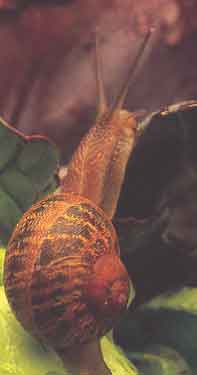 If overnight newly planted seedlings are disappearing and there are large holes in your plants, the culprits
are probably snails or slugs. Usually a close look at the plants will reveal the characteristic silvery
trail. They avoid the sun and come out mainly at night or on dark, cloudy days. They secrete mucous to move
about and by using the same trail and sharing trails with other snails they save on mucous production. During
cold or dry weather, snails can seal their shells, and remain dormant for several years.
If overnight newly planted seedlings are disappearing and there are large holes in your plants, the culprits
are probably snails or slugs. Usually a close look at the plants will reveal the characteristic silvery
trail. They avoid the sun and come out mainly at night or on dark, cloudy days. They secrete mucous to move
about and by using the same trail and sharing trails with other snails they save on mucous production. During
cold or dry weather, snails can seal their shells, and remain dormant for several years.Suggested Organic Strategies:
- Start with a garden cleanup to reduce snails and slugs breeding sites. Wear thick gloves and gumboots to remove any garden rubbish.
- Handpicking, will over time, greatly reduce the number of snails; it is less effective for slugs. The best time is 2 hours after sunset by torchlight.
- Barriers can be used to protect vulnerable plants and young seedlings. Suitable materials include crushed eggshells, lime, wood ash, wood shavings and sawdust. The best barrier of all is adhesive copper tape, as it works wet or dry.
- Homemade traps such as inverted grapefruit halves, pots or wooden boards can be placed close to where the slugs and snails are harbouring. Check early each morning or they will become habitat instead!
Organic Strategies for Slug and Snail Control © Frances Michaels
Australia has 6,000 species of native snails, none of which cause problems to garden plants. Some of our native species are carnivorous, feeding on garden snails.
The common brown snail Helix aspera is an unwanted arrival from Europe. It can take from 4 months to 2 years to mature and may live 12 years. Snails are hermaphrodite and during the warmer months can lay several egg clusters. The clusters contain up to 100 white eggs, at a soil depth of 20-40 mm.
Effective control of snails and slugs in the long term needs a combination of cultural, biological and chemical methods rather than relying on a single solution.
Biological Controls
Since all of our pest snails and slugs are introduced to Australia, the range of native biological controls is limited. Predators include some birds, including magpies, kookaburras, mudlarks and starlings. The appetite of birds for snails tends to vary greatly from area to area. Other predators include blue tongue lizards, rats, centipedes, frogs, predatory beetles, predatory snails and slugs. Chickens or ducks, particularly Khaki Campbell or Indian Runner, can provide effective, long-term control in orchards. Poultry are too destructive in gardens to be given unlimited access but in small mobile cage systems rotated over garden beds, they will clean up slugs and snails, fruit fly, 28-spotted ladybeetle and other pests that are attempting to hide out in the garden.
Physical and Cultural Controls
Start with a garden cleanup to reduce snails and slugs breeding sites. Wear thick gloves and gumboots to remove any old wooden boards and other garden rubbish. Check around the compost heap, inside stored pots and around drains and retaining walls. Have ready a bucket of soapy water to drown any you find or a bucket of just hot water if you keep poultry. Simply stepping on them may still allow mature eggs to hatch.
Handpicking, will over time, greatly reduce the number of snails; it is less effective for slugs. The best time is 2 hours after sunset by torchlight. Consider offering a small financial incentive to young members of the household to collect them.
Barriers can be used to protect vulnerable plants and young seedlings. Suitable materials include diatomaceous earth, crushed eggshells, lime, wood ash, wood shavings and sawdust but these are only effective when kept dry.
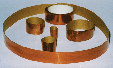 Tests in the USA have shown copper banding out-performed all other methods for protection from slugs and
snails. When the pest makes contact with the copper it causes a reaction similar to an electric shock,
which repels them. It is non-toxic, very long-lasting, with no possible potential poisoning of other
animals, pets or children.
Copper Barrier Tape is very
effective used as individual collars around young seedlings or pots. Worldwide research shows that copper,
a soil trace element, is also an excellent repellent for slugs and snails and will kill when sprayed
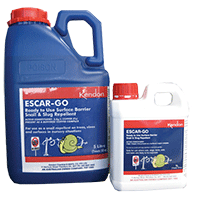
directly on them. Escar-Go is a
copper spray that creates an 'invisible' barrier when applied around plants, on tree trunks, pots or letter
boxes that lasts for months, doesn't wash off and is completely safe around kids, pets and wildlife.
Tests in the USA have shown copper banding out-performed all other methods for protection from slugs and
snails. When the pest makes contact with the copper it causes a reaction similar to an electric shock,
which repels them. It is non-toxic, very long-lasting, with no possible potential poisoning of other
animals, pets or children.
Copper Barrier Tape is very
effective used as individual collars around young seedlings or pots. Worldwide research shows that copper,
a soil trace element, is also an excellent repellent for slugs and snails and will kill when sprayed
directly on them. Escar-Go is a
copper spray that creates an 'invisible' barrier when applied around plants, on tree trunks, pots or letter
boxes that lasts for months, doesn't wash off and is completely safe around kids, pets and wildlife.Least Toxic Chemical Controls
 Repellent sprays can be made at home from garlic or wormwood.
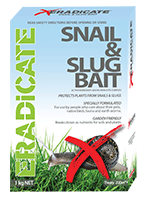
Eradicate Snail and Slug Bait is based on iron. This product minimises the risk of harm to pets, poultry and wildlife and is very effective when compared to the following baits. It has the added advantage of breaking down in 1 to 4 weeks to become a soil micronutrient.
Other snail baits containing either metaldehyde (green) or methiocarb (blue) have been around for many years. Metaldehyde baits are preferable to methiocarb because they break down relatively quickly to form acetic acid (vinegar) and are less toxic. Metaldehyde by itself is a snail and slug attractant but it is usually mixed with wheatmeal and an added bitter substance to discourage pets and wildlife. Metaldehyde bait is also produced as a dolomite pellet with no attraction for pets and wildlife. If using baits, place them in a container to restrict access of pets and wildlife and to reduce leaching of chemicals into the soil. Use as few pellets as possible, to prevent resistance to the chemicals increasing in the snail and slug population. Don't use these baits at all if your poultry have access to the garden.
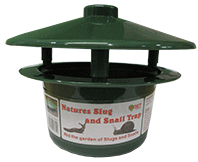
Homemade traps such as inverted grapefruit halves, pots or wooden boards can be placed close to where the slugs and snails are harbouring. Check early each morning or they will become habitat instead! Beer, wine or any yeast product mixed with water, is an attractant; place it in a bowl, with the rim 1 or 2 cm above the ground, to drown them. Research has found sugar water (5% sugar solution) to be a highly effective slug attractant. Empty the traps every day into the compost or chook run.
Suggested Products:
Escar-Go
Eradicate Snail and Slug Bait
Slug and Snail Trap
Home
Green Harvest Organic Gardening Supplies is permanently closed as of 5pm on 1-11-2023.
We will not be taking orders by this website, in person, by phone or email. Our display garden and retail shop are closed forever.
Read more...
Phone:07 54357000
Phone calls will only be responded to sporadically and only in reference to orders placed prior to 2-11-2023. All the useful growing and organic pest management research and resources are available on this website for a while still.
No liability will be accepted by Green Harvest, its owners or employees as to the accuracy of any information. No responsibility will be taken for damage to property or persons due to information given about a product or technique. No responsibility will be taken for the loss of a crop or income due to information given about a product or technique.
 Shopping here is private and secure.
Copyright © 2001 - 2024 Green Harvest Organic Gardening Supplies
No part of this website may be reproduced without permission of the owner