| Organic Seeds | Edible Plants | Organic Pest Controls | Books | Tools, Propagation & Fertilisers | Sprouting & Microgreens | Poultry Supplies | Specials & Gift Ideas |

Top

We will send an email to this address*
when is next available
* we will use this email address only for this notification and then we will delete it.
 Home
Home
Green Harvest Organic Gardening Supplies is permanently closed as of 5pm on 1-11-2023.
We will not be taking orders by this website, in person, by phone or email. Our display garden and retail shop are closed forever.
Read more...
Phone:07 54357000
Phone calls will only be responded to sporadically and only in reference to orders placed prior to 2-11-2023. All the useful growing and organic pest management research and resources are available on this website for a while still.
Green Manure - An Introduction
You can go directly to the green manure seeds on the links below:
Warm season green manure seeds and kits
Cool season green manure seeds and kits
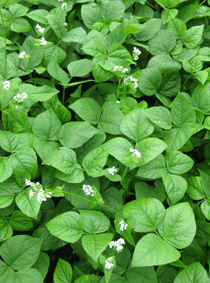 Green manures are a cornerstone of ecologically sustainable gardening. These are annual fast growing crops,
usually a legume combined with a grass, that are grown to build both organic matter and nitrogen levels to improve
the soil. This combination works well, the legume providing nitrogen and the grass the bulk of the organic matter.
'Grass' refers to a cereal grain such as barley, oats or sorghum, not a weedy running grass like couch or kikuyu.
When used in a crop rotation they can break disease cycles. They can provide outstanding benefits for the soil,
crop and you, the gardener by:
Green manures are a cornerstone of ecologically sustainable gardening. These are annual fast growing crops,
usually a legume combined with a grass, that are grown to build both organic matter and nitrogen levels to improve
the soil. This combination works well, the legume providing nitrogen and the grass the bulk of the organic matter.
'Grass' refers to a cereal grain such as barley, oats or sorghum, not a weedy running grass like couch or kikuyu.
When used in a crop rotation they can break disease cycles. They can provide outstanding benefits for the soil,
crop and you, the gardener by:- Increasing organic matter, earthworms and beneficial micro-organisms
- Increasing the soil's available nitrogen and moisture retention
- Stabilising the soil to prevent erosion
- Bringing deep minerals to the surface and breaking up hardpans
- Providing habitat, nectar and pollen for beneficial insects and reducing populations of pests
- Improving water, root and air penetration in the soil
- Smothering persistent weeds; good choices for weed suppression include lablab, cowpea, lucerne and buckwheat.
Generally a broadcast sowing method is used, where the seed is evenly scattered across freshly cultivated ground and lightly covered or raked in.
- Correct any nutrient deficiencies (except nitrogen) before sowing
- Legumes prefer a neutral soil, pH 6.5 - 7.5
- Cover the seed to a depth of 2-3 times the width of the seed and firm the soil i.e. very fine seed such as clover should be very lightly covered whilst larger seed like lupins should be well covered.
- Seed must be in direct contact with the soil.
- Read the individual packet directions.
- Irrigate in all but rainy weather for best results
- Select the right plants for suitability to climate and soil and ease of establishment
 Timing
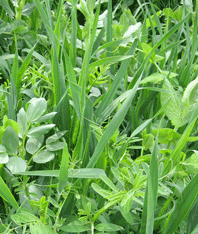
Timing is important for good germination; planting in the correct season means the soil temperature is optimal and seed will sprout readily. Unless irrigation is available green manures should be sown during rainy periods. If a green manure is planned to be followed by a particular crop, enough time needs to be left for the seed to germinate, grow and begin to flower, be chopped down or dug-in and begin to decompose. Generally allow a minimum of 8 weeks for the green manure to grow and 6 weeks for it to decompose.
Green manures are divided into warm or cool season crops.
Cool Season green manures include:
BQ Mulch, fava bean, fenugreek, lupins, oats, subclover, woolly pod vetch. As a general guide, in areas with cold winters in southern Australia, begin sowing in early March and again in early spring; most of northern NSW and Queensland should wait until late April - May before sowing; in frost-free areas these seeds can be sown right through winter, until early August.
Cool season green manure seeds and kits
Warm Season green manures include:
Buckwheat, cowpea, French white millet, Japanese millet, lablab, mung bean, soybean. As a general guide sow in spring after all danger of frost has passed, usually mid-September; sow summer whenever good rainfall is expected; in tropical areas seeds can be sown right through the year whenever moisture is available.
Warm season green manure seeds and kits
Managing the green manure for maximum soil benefit
Green manures are generally 'harvested' either by slashing or digging-in just as the plants begin to flower, while still green and lush. Leaving them to fully flower reduces the nitrogen content and increases the risk of weediness from seed set into the following crop. Digging-in at the end of the green manure crop is traditional but not strictly necessary. Instead this is a management decision as to what suits your aims and gardening style best. By slashing and leaving the green manure crop on the surface you create mulch for the following crop see In-Situ Mulch for more detail.
The breakdown of nutrients is slower, similar to a slow-release fertiliser, which is an advantage if the following crop will not be planted for a while or during heavy rain periods where the nutrient would just wash away. If you choose to dig the green manure in, then just dig it through the top 15cm of topsoil. It helps to mow or slash the green manure crop finely first, before incorporation. Once incorporated the green manure will break down rapidly.
 This creates an active composting process within the soil which in the very short term can have a negative impact on
seeds germinating. To avoid this you need to wait 6 weeks after incorporation. If you need to sow seed sooner then
slashing it is the best choice.
This creates an active composting process within the soil which in the very short term can have a negative impact on
seeds germinating. To avoid this you need to wait 6 weeks after incorporation. If you need to sow seed sooner then
slashing it is the best choice.Biofumigation
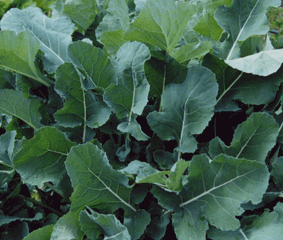
Green manures can be used to interrupt pest and disease cycles in much the same way as crop rotation: this is called biofumigation. Growing a biofumigation crop can be used to control root knot nematodes and root rot fungal pathogens, reducing the need to use toxic chemicals for soil fumigation. Plants that do an excellent job of this are BQ Mulch, mustard and marigolds Tagetes patula. Sow marigolds in spring; BQ Mulch and mustard in autumn. To be successful this green manure needs to be dug into the soil where it releases natural gases as it decomposes.
What is a Legume?
Soil-building strategies like green manuring and cover cropping rely on a unique ability of a group of plants, the legumes, to 'fix' nitrogen. Plants such as clover, lucerne, peas and beans have an important advantage over other plants, of being able to obtain nitrogen, a major element needed for plant growth, from the soil air. They do this by forming a symbiotic relationship with a group of bacteria called rhizobium, which live within a specialised structure, called a nodule, on the plant's roots. The rhizobia can take nitrogen (N2) from the air and convert it to ammonium (NH4), the form of nitrogen plants normally obtain from the soil. This process is called nitrogen fixation.
Why Inoculate?
Rhizobia occur naturally, but they are very host-specific, that is, any one species of Rhizobia will only live with a few different types of legume. Consequently, when sowing legumes, the seed should be coated with a culture of the correct Rhizobium before sowing. This is referred to as inoculation. The bacteria are stored in peat, and as this is a living culture, it must be treated with care. It should be stored in the fridge and used within 3 months. To use, moisten the seed with a small amount of milk and stir in the inoculant until seeds are coated. Then to allow even spreading of the seed over the seedbed, mix in enough agricultural lime or superfine lime to dry the mixture out (use approx. 6g of lime to 100g of seed). This is called pelleting and makes fine seed easier to spread. If you are sowing more than 1 legume at a time, always complete the pelleting process before combining the seed together. Do not inoculate the seed until you are ready to sow it and do not leave the inoculated seed in the sun. You can also use sand, vermiculite or perlite to help spread the seed evenly.
Note: As Rhizobia are naturally occurring soil organisms they are allowable inputs into organic farms.
Additional Benefits of Green Manure Crops
Green manures can be used to smother persistent weeds; they may also make conditions unsuitable for certain weeds by improving the structure and nutrient status of the soil. Good choices for weed suppression include lablab, cowpea, lucerne and buckwheat. Green manures can also be used to under-sow crops such as corn, reducing weed growth and protecting the soil from erosion. Useful species for under-sowing include subclover, cowpea, lucerne and woolly pod vetch.
The soil should never be left bare, vulnerable to erosion and weed invasion, always put in a green manure crop.
You can find additional information here:
More information on mulch
More information on organic soil improvement
More information on cover crops and living mulch
Warm season green manure seeds and kits
Cool season green manure seeds and kits
Home
Green Harvest Organic Gardening Supplies is permanently closed as of 5pm on 1-11-2023.
We will not be taking orders by this website, in person, by phone or email. Our display garden and retail shop are closed forever.
Read more...
Phone:07 54357000
Phone calls will only be responded to sporadically and only in reference to orders placed prior to 2-11-2023. All the useful growing and organic pest management research and resources are available on this website for a while still.
We guarantee our seeds to the value of the purchase price. We are happy to replace the seeds, give you a credit or refund, whichever you prefer. Other than our guarantee to the extent of the purchase price Green Harvest gives no other warranty expressed or implied. No liability will be accepted by Green Harvest, its owners or employees as to the accuracy of any information. No responsibility will be taken for damage to property or persons due to information given about a product or technique. No responsibility will be taken for the loss of a crop or income due to information given about a product or technique.
 Shopping here is private and secure.
Copyright © 2001 - 2024 Green Harvest Organic Gardening Supplies
No part of this website may be reproduced without permission of the owner