| Organic Seeds | Edible Plants | Organic Pest Controls | Books | Tools, Propagation & Fertilisers | Sprouting & Microgreens | Poultry Supplies | Specials & Gift Ideas |

Top

We will send an email to this address*
when is next available
* we will use this email address only for this notification and then we will delete it.
 Home
Home
Green Harvest Organic Gardening Supplies is permanently closed as of 5pm on 1-11-2023.
We will not be taking orders by this website, in person, by phone or email. Our display garden and retail shop are closed forever.
Read more...
Phone:07 54357000
Phone calls will only be responded to sporadically and only in reference to orders placed prior to 2-11-2023. All the useful growing and organic pest management research and resources are available on this website for a while still.
|
Tropical and Subtropical beans |
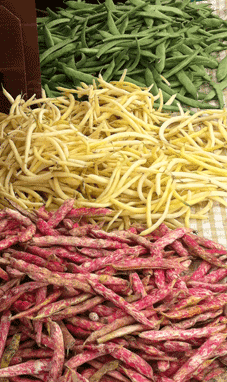 Beans
BeansPhaseolus vulgaris, Phaseolus coccineus Beans with the exception of Broad Beans are warm season crops and frost tender. Seeds germinate best at 18 - 25°C; seed will rot in cold, wet soil and even if they do germinate the plants will lack vigour and be overtaken by a later sowing into a warmer soil. In temperate areas sow beans through spring and early summer. In cold temperate areas you may need to wait until late October, early November. In frost-free, subtropical areas beans can be sown all year but will suffer from pest (bean fly) and disease (rust) problems at the height of summer so avoid sowing in December and January. In tropical areas sow during the dry season April to August. In the tropics snake beans can be a better choice as they are more disease resistant. Other tropical beans include Madagascar Bean and Winged Bean. These tropical beans can be grown as far south as Brisbane but require a very warm soil to germinate so should not be sown before early summer. Soil Type: Fertile, well drained, garden loam with a pH of 6.2 - 7.0 Germination period: 4 - 10 days Planting depth: 2 - 4 cm deep Position: Full sun; bush beans can have a strange reaction to insufficient sunlight or constant overcast weather, they can start to turn into climbers. All beans were originally climbers and may revert if conditions don't suit them, such as not enough sunlight. Sow Where: Direct into garden bed Row Spacing: Double rows 60 cm apart Plant Spacing after thinning: 10 - 15 cm between plants Details: Hill plants, up to 10 cm deep, to protect from wind damage. Water well once after sowing and then do not water again until seedlings appear. Harvest: Pick daily, early in the morning for the best flavour |
 Bush Bean 'African Premier'
Rare
UT
Bush Bean 'African Premier'
Rare
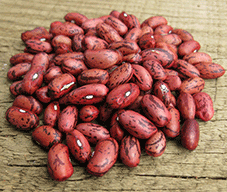
UT'African Premier' originates from Kenya and forms a neat, compact bush. The attractive bean seeds are a reddish, pink-brown with black speckles. The flat, green pods have a meaty texture. It is disease resistant and drought hardy so worth trying in arid areas. It can be used as a fresh bean or a dried bean. Days to harvest: 60. SB256 (approx. 15 seeds per pkt.) Grower needed... |
 Semi-climbing Bean 'Anto Nearly Round'
Rare
UT
Semi-climbing Bean 'Anto Nearly Round'
Rare
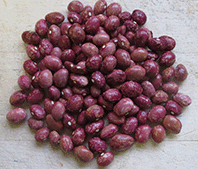
UTThis is an intriguing-shaped bean with a beautiful mottled red colour. It can be eaten as a fresh bean or dried. It does not climb very high but does better with some support and is very productive. SB100 (approx. 15 seeds per pkt.) Grower needed... |
 Bush Bean 'Blue Lake'
UT
Bush Bean 'Blue Lake'
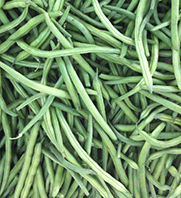
UTBred in the 1960's from the climbing variety, 'Blue Lake' is considered one of the best tasting bush beans. The round, green, stringless pods, 15 - 17 cm long are tender and sweet; the seeds are white. It is heavy bearing and copes well with summer heat. Suitable for freezing. Pick daily, early in the morning for the best flavour. Days to harvest: 58. SB357 (approx. 20 seeds per pkt.) |
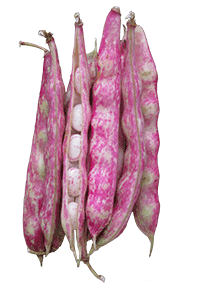 Bush Bean Borlotti 'Red Rooster'
UT
Bush Bean Borlotti 'Red Rooster'
UT'Red Rooster' has attractive mottled red pods, 13cm long, with 6-7 dark maroon and white seeds when fresh, changing to maroon and tan when dried; it is disease resistant and productive. It is mainly grown for use as a dried bean but the fresh podded beans are delicious. Use dried beans in soups, stews, Mexican dishes and baked beans. Days to harvest: 60 - 70; harvest when the pods rattle, hang upside down undercover; thresh when fully dried; freezing for 2 weeks before storage will kill weevils. SB274 (approx. 45 seeds per pkt.) SB275 SB276 SB107 No TAS |
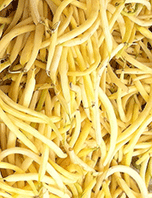 Bush Bean 'Cherokee Wax'
UT
Bush Bean 'Cherokee Wax'
UT'Cherokee Wax' is a heritage bush butter bean, believed to have been in cultivation for many centuries. It is heavy bearing and rust resistant with a rich flavour. It produces nearly round, stringless, yellow pods, 13 - 15 cm long with black seeds. Days to harvest: 48 - 60. SB239 (approx. 45 seeds per pkt.) SB181 SB182 SB160 No TAS |
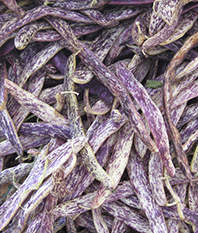 Bush Bean 'Dragon's Tongue'
UT
Bush Bean 'Dragon's Tongue'
UTA Dutch heirloom that is famous for its excellent flavour and striking appearance. The stringless, flat pods are pale yellow with purple streaks, 17.5 cm long with a crisp, juicy texture. The plants are compact and very productive. It can be used fresh or as a dried bean. Days to harvest: 55 - 65. SB351 (approx. 45 seeds per pkt.) SB352 SB449 |
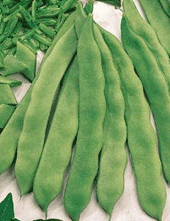 Bush Bean 'Italian Romano'
UT
Bush Bean 'Italian Romano'
UTA stringless bean with flat, medium-green pods 15 cm long with a meaty texture and excellent flavour. Beans hold well on the plant without becoming tough. Very disease resistant and productive. Although these are bush beans, they can have a strange reaction to insufficient sunlight or constant overcast weather and start to turn into climbers. All beans were originally climbers and may revert if conditions don't suit them, such as not enough sunlight. Days to harvest: 53 - 58. SB230 (approx. 45 seeds per pkt.) SB231 SB232 SB161 No TAS |
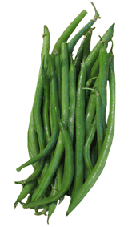 Bush Bean 'Jade'
UT
Bush Bean 'Jade'
UT'Jade' is a bush bean, producing dark green, tender, very straight, stringless, round pods, 15 - 17 cm long with a rich flavour. It is disease resistant and highly productive with a long season. Days to harvest: 60. SB332 (approx. 45 seeds per pkt.) SB333 SB334 SB185 No TAS |
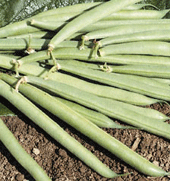 Bush Bean 'Provider'
UT
Bush Bean 'Provider'
UT'Provider' is a bush bean, disease resistant and very productive. It has an upright growth habit; producing straight, tender, stringless, round pods, 17 cm long. This variety has the ability to germinate in cool soil so is a good choice for early spring sowing. Days to harvest: 50. SB202 (approx. 45 seeds per pkt.) SB203 SB204 SB162 No TAS |
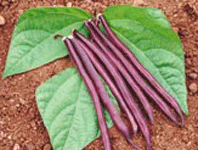 Bush Bean 'Royal Burgundy'
UT
Bush Bean 'Royal Burgundy'
UT'Royal Burgundy' is an open-pollinated bush bean, producing beautiful glossy, tender, stringless, round pods, 15 cm long. The delicious, violet-purple beans turn green when cooked. It is disease resistant and productive. Days to harvest: 52. SB293 (approx. 45 seeds per pkt.) SB294 SB295 SB266 No TAS |
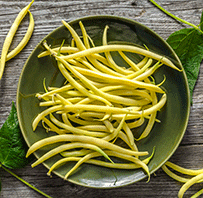 Bush Bean 'Sex Without Strings'
UT
Bush Bean 'Sex Without Strings'
UTWe have to admit being a bit baffled by the name of this Australian heirloom bean. It is definitely worth growing for its tender, stringless, golden beans but we have no idea where the name came from. It grows as a small compact bush and produces early and is very productive. Days to harvest: 50 - 60. SB147 (approx. 20 seeds per pkt.) Grower needed... |
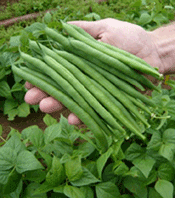 Bush Bean 'Simba'
UT
Bush Bean 'Simba'
UT'Simba' is an open-pollinated, smooth, round, stringless variety; producing very dark green, fleshy beans 13-14 cm long with a great flavour. It is a heavy cropper and disease resistant to rust, summer death and halo blight. A major commercial variety, very suitable for farmer's markets. Days to harvest: 45 - 52. SB205 (approx. 45 seeds per pkt.) Also on sale as part of a Warm Season Seed Collection SB206 SB207 |
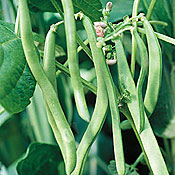 Bean Climbing 'Blue Lake'
UT
Bean Climbing 'Blue Lake'
UT'Climbing Blue Lake' is a stringless, round, tender, dark green bean 15 cm long with exceptional eating qualities; it also freezes well. It is very productive; generally climbing beans produce over a longer period than bush beans. 'Blue Lake' also copes well with summer heat. Days to harvest: 55 - 70. SB252 (approx. 45 seeds per pkt.) SB253 SB254 SB428 No TAS |
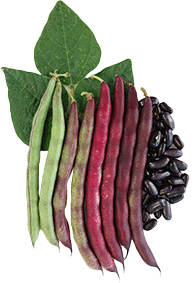 Bean Climbing 'Cherokee Trail of Tears'
Rare
UT
Bean Climbing 'Cherokee Trail of Tears'
Rare
UTAn heirloom carried by the Cherokee people as they were forced to march in the winter of 1839 from the Smoky Mountains to Oklahoma, by the US Federal Government over the infamous 'Trail of Tears'. This is an attractive climbing bean with long, pale green pods tinged with purple, the seeds are shiny black. It is mainly eaten as a fresh bean but can also be used dried. Days to harvest: 85. SB180 (approx. 15 seeds per pkt.) SB149 |
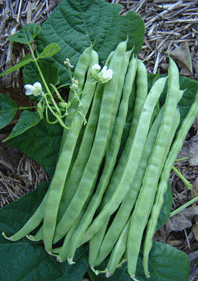 Bean Climbing 'Giant of Stuttgart'
UT
Bean Climbing 'Giant of Stuttgart'
UT'Giant of Stuttgart' is a European heirloom bean with flat, stringless pods up to 30 cm long. It a vigorous and long producing bean, cropping over a 3 month period. It produces an abundance of tender, delicious, green beans. Simply one of the best beans to grow. Try to save some seed as it is often in short supply. Days to harvest: 70. SB272 (approx. 20 seeds per pkt.) SB322 |
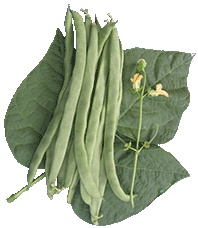 Bean Climbing 'Lazy Housewife'
UT
Bean Climbing 'Lazy Housewife'
UTsyn. 'Lazy Wife' An heirloom bean introduced around 1810, it is believed these beans were so-named because they were the first beans to not require de-stringing! It has a great flavour and is very productive, bearing over a long period. The round, green pods grow 16 - 20 cm long with shiny white seeds. It can be used fresh or as a dried bean. Days to harvest: 75 - 80. SB158 (approx. 20 seeds per pkt.) SB112 SB427 |
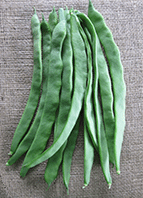 Bean Climbing 'Northeaster'
Rare
UT
Bean Climbing 'Northeaster'
Rare
UTsyn. 'Early Riser', 'Kwintus' 'Northeaster' is a Roma-type flat bean with pods up to 20 cm long, 2.5 cm wide. The vigorous vines produce an abundance of tasty, stringless, bright green beans with white seeds. It matures almost 2 weeks earlier than other climbing beans and stays tender even when big. Days to harvest: 55 - 70. SB246 (approx. 20 seeds per pkt.) SB247 |
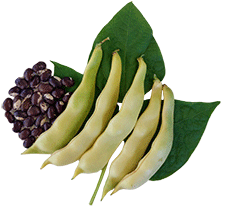 Bean Climbing 'Portuguese Butter'
Rare
UT
Bean Climbing 'Portuguese Butter'
Rare
UTThis heirloom romano butter bean was introduced to us by John H, who has grown it for many years. He told us it is a traditional bean grown in Portugal. The 2 cm wide, yellow flattened pods are 15 cm long and stand out against the deep green foliage, making them very easy to see and harvest. The young fresh beans are tasty, very fleshy and stringless. Once the beans are more mature, filling out with the bean seeds but still have yellow pods, it is traditionally eaten as a tender and delicious shelled bean. When mature the dried pods contain beautiful purple and cream mottled seeds to use as a dried bean. Days to harvest: 75. SB386 (approx. 15 seeds per pkt.) SB190 Grower needed... |
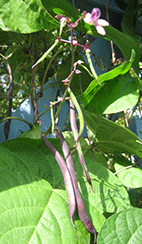 Bean Climbing 'Purple King'
UT
Bean Climbing 'Purple King'
UT'Purple King' produces dark purple pods, 18 cm long, which turn a deep, rich green when cooked. It has a long picking period and is heavy bearing with a great flavour. It copes well with summer heat. Days to harvest: 65. SB282 (approx. 45 seeds per pkt.) SB168 SB169 SB251 No TAS |
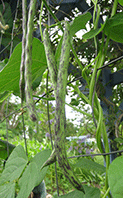 Bean Climbing 'Rattlesnake'
UT
Bean Climbing 'Rattlesnake'
UTSyn. 'Preacher' 'Rattlesnake' is an excellent climbing bean with a long harvest. Pods are 18 cm long, green, streaked with purple, stringless when young, with a rich, full flavour. The pods can be eaten fresh or allowed to dry on the vines for a harvest of beige and brown speckled seeds that are delicious in soups. It copes well with heat and is drought tolerant. Days to harvest: 75 - 90. SB353 (approx. 40 seeds per pkt.) SB354 SB355 SB359 No TAS |
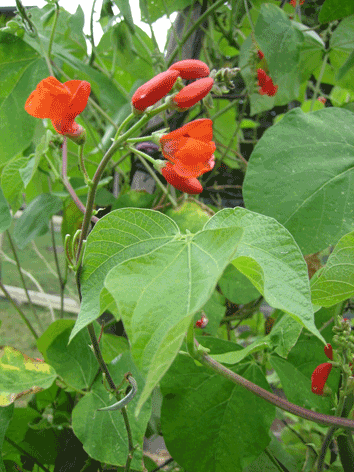
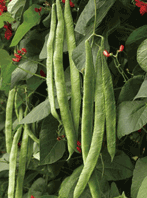 Bean Climbing 'Scarlet Runner'
UT
Bean Climbing 'Scarlet Runner'
UTPhaseolus coccineus 'Scarlet Runner' syn. 'Seven Year' bean is an heirloom variety with long, flat dark green pods with good eating qualities. An added attraction is the scarlet flowers. It can be treated as a perennial, shooting back from the rootstock every year. Best for cooler areas, it may fail to flower and bear well in warmer areas. Sow in temperate areas from spring to early summer. Days to harvest: 65. SB150 (approx. 12 seeds per pkt.) SB229 SB194 SB432 No TAS |
|
What's in a name? The beans commonly grown and sold in Australia can also be called French beans, green beans, snap beans, shell beans or runner beans. Botanically they can be divided into 2 groups: 1. Phaseolus vulgaris This group includes snap beans, string beans, French beans, kidney beans, flageolets, haricot vert, filet beans and romano beans. This is a very diverse group, with seeds in an amazing range of colours. There are both fresh and dried types and climbing and bush types. 2. Phaseolus coccineus This group is commonly called Runner Beans syn. Case Knife Bean, the bean seeds are large and the flowers are pink or red. Most runner beans are climbing which is where the name 'runner' comes from and they are often perennial . It includes the cultivars Painted Lady, Sunset, Scarlet Runner syn. Seven Year Bean. They are best in cooler areas. These beans can be further divided into bush (also called dwarf beans) or climbing beans (also called pole beans). |
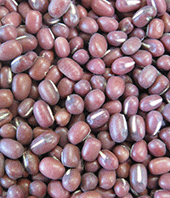
 Bean 'Adzuki'
UT
Bean 'Adzuki'
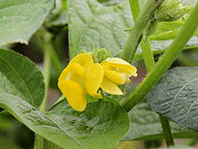
UTVigna angularis Syn. Chinese red bean Adzuki beans are small, red beans that originated in Japan. It is a warm season annual that grows to 60 cm tall. The beans have a sweet nutty flavour, are high in protein and are relatively easy to digest compared to other beans. It is popular in Asian cooking and macrobiotic diets. No soaking is required for the dried beans and the cooking time is relatively short. It does best from southern NSW (with irrigation) to SE Queensland. It can also be used as a green manure. It does best when it is sown in mid-summer so that the pods are maturing as the temperature starts to fall. Sow it from early December to January in southern NSW; late January to early February in SE Queensland. Days to harvest: 120 for dried beans harvest when pods turn yellow, before splitting occurs; young pods can be eaten fresh. SB317 (approx. 45 seeds per pkt.) |
Broad Beans
 Vicia faba syn. Fava Bean, Faba Bean Broad beans are annual cool season vegetables used either for the young, tender pods or a mature beans, fresh or dried. Also useful as a winter green manure. Sow late summer, autumn or winter depending on area, it germinates best at 15 - 25°C soil temperature. It is most suitable for cool and warm temperate areas; it may fail to flower and bear well in the subtropics. Soil Type: Fertile, well drained, garden loam with a pH of pH 6.5 - 7.5; lime if necessary. Germination period: 8 - 14 days Planting depth: 4 - 6 cm deep Position: Full sun in a sheltered position. Sow Where: Direct into garden bed Row Spacing: 60 - 75 cm apart Plant Spacing: 15 - 20 cm apart Details: Water well once after sowing and then do not water again until seedlings appear. Harvest: Pinch out the (edible) growing tip once a good crop of pods has set. Harvest the lowest pods first. |
 Broad Bean 'Aquadulce'
UT
Broad Bean 'Aquadulce'
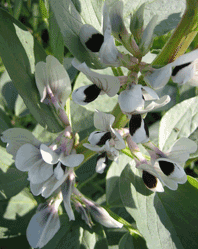
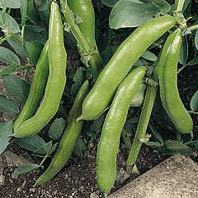
UT'Aquadulce' is a heirloom broad bean variety with fragrant black and white edible flowers. The bright green beans have a great flavour when young and tender and can be steamed or eaten fresh. Once mature the large seeds are blanched, peeled and used pureed in risotto or pasta and to make delicious dips. 'Aquadulce' produces an early, prolific crop on tall plants, pods are 15 cm long. Days to harvest: 85 - 95. SB258 (approx. 30 seeds per pkt.) SB110 SB233 SB172 No TAS |
 Broad Bean 'Coles Dwarf'
UT
Broad Bean 'Coles Dwarf'
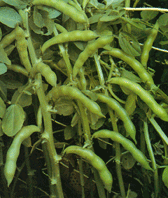
UT'Coles Dwarf' is short variety able to withstand more wind damage than other broad beans. It produces a prolific crop of gourmet beans with a great flavour. The pods are 13 cm long x 2.5 cm wide with 3 to 4 seeds each. The young pods can be harvested and eaten whole, or wait until the pods are full size and then shell the pods for the white seeds. Days to harvest: 70. SB259 (approx. 30 seeds per pkt.) SB260 SB261 SB171 No TAS |
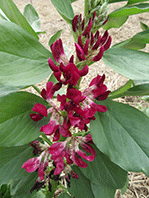 Broad Bean 'Crimson Flowered'
OG
Broad Bean 'Crimson Flowered'
OG'Crimson Flowered' is a very decorative heirloom broad bean with medium sized upright pods. It produces a good crop of gourmet beans with a great flavour. The young, pale green pods can be harvested and eaten whole, or wait until the pods are full size and then shell the pods for the light green seeds. Suitable for containers or as an ornamental in the flower garden. Days to harvest: 85 - 95. SB337 (approx. 10 seeds per pkt.) SB466 Grower needed... |
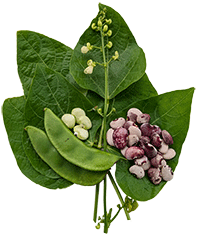 Lima Bean Climbing 'Civil War'
Rare
H
UT
Lima Bean Climbing 'Civil War'
Rare
H
UTPhaseolus lunatus Syn. butter bean 'Civil War' is an heirloom bean that is grown as a podding bean or dried bean. Eaten young as a podding bean they make a great subtropical substitute for broad beans, which can be unreliable in warmer climates. To eat fresh, harvest the pods when they are well-filled with seeds and slightly leathery. Remove the seeds and eat steamed or in soups and stews. To harvest as a dried bean wait until the pods are nearly ready to split. Remove the seeds from the pods and dry further in a well-ventilated space, away from rodents. Lima beans originated in Peru where they have been cultivated for thousands of years. 'Civil War' is a vigorous, climbing bean that will need a strong support. It is excellent at coping with wet, humid conditions. Suitable for warm temperate, subtropical and tropical areas. SB249 (approx. 15 seeds per pkt.) SB250 |
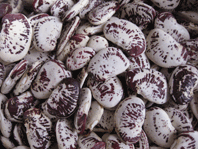 Bean 'Madagascar'
H
UT
Bean 'Madagascar'
H
UTPhaseolus lunatus Syn. Lima del Papa Runner, Christmas Lima A vigorous, climbing, tropical lima bean, it lives for many years and is excellent at coping with wet, humid conditions. It can be used as a tropical alternative to broad beans or as a dried bean. The dried beans cook quickly and make tasty vegetarian burgers! Suitable for warm temperate, subtropical and tropical areas. Madagascar Bean growing information. SB111 (approx. 10 seeds per pkt.) SB371 SB420 |

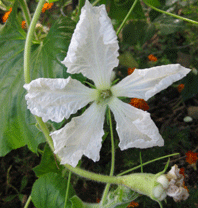 New Guinea Bean
H
UT
New Guinea Bean
H
UTLagenaria siceraria Syn. Italian edible gourd, gourd cucuzzi, Indian squash, bottle gourd, calabash gourd, doodhi, lowki Not of course a bean at all, instead this is a type of squash. A traditional Italian vegetable, the light green fruits are cylindrical 60 - 100 cm long and can weigh up to 2.5 kg. The creamy white flesh is said to have a flavour and texture similar to green beans, which is probably where it gets its common name. The white flowers are large and scented. Sow next to a trellis, after all danger of frost has passed, with a minimum soil temperature of 22°C, 2.5 cm deep, 30 cm apart. Early plants can be sown in seedling pots for later transplanting. Prepare well-drained soil with compost and well-rotted manure. Pick the green fruit when young, 15-60 cm long. Prepare it in a similar way to squash. SN101 (approx. 10 seeds per pkt.) SN107 Looking for Guada Bean? There is a bit of confusion around this plant name. It is sometimes used as a synonym for New Guinea Bean Lagenaria siceraria which is a true gourd but more often refers to Serpent Gourd Trichosanthes anguina. |
 New Guinea Bean 'Kobu'
Rare
H
UT
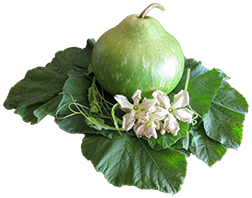
New Guinea Bean 'Kobu'
Rare
H
UTLagenaria siceraria Syn. lauki, Indian squash, bottle gourd, calabash gourd, doodhi, lowki This is a round version of the more common New Guinea Bean with a similar range of uses. It has a mild taste and is mainly used as an ingredient in spicy dishes to soak up the flavour. The creamy white flesh is said to have a flavour and texture similar to green beans, which is probably where it gets its common name. The white flowers are large and scented. The vines are vigorous and quickly cover a large trellis. It is useful in the subtropics and tropics as an alternative to zucchini, which is very prone to powdery mildew in humid areas. Sow next to a trellis, after all danger of frost has passed, with a minimum soil temperature of 22°C, 2.5 cm deep, 30 cm apart. Early plants can be sown in seedling pots for later transplanting. Prepare well-drained soil with compost and well-rotted manure. Pick the green fruit when young, prepare it in a similar way to squash. SN113 (approx. 10 seeds per pkt.) SN111 |
 Rice Bean
H
UT
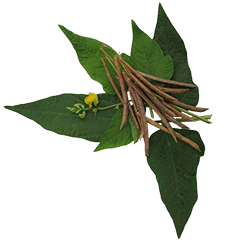
Rice Bean
H
UTVigna umbellata A small bush bean with yellow flowers that crops over a long period during the warmer months. The small red beans are mainly used as a dried bean but the green pods, shoots and young leaves can also be eaten. In other parts of the world it is used for fodder, green manure or as a nitrogen-fixing intercrop. Days to harvest: 120-150. SB159 (approx. 20 seeds per pkt.) |
|
Tepary Bean
Phaseolus acutifolius Syn. Pawi, Pavi, Tepari, Escomite, Yori mui, Yorimuni Tepary bean is an ancient crop grown by Native Americans for thousands of years, it is native to southwestern USA and Mexico. It was commonly planted as part of a Three Sisters Garden, a traditional planting method used by the Iroquois for centuries. The 5 cm long, narrow pods are much smaller than common beans Phaseolus vulgaris; the beans are small and rounded. It grows as an annual bush bean to 50 cm tall with a semi-climbing habit. It is used primarily as a dried bean and is higher in protein and contains more soluble fibre than common beans. Productive and easy to grow, it is considered one of the most drought and heat tolerant crops in the world. The water requirements are low and the crop will grow in areas with an annual rainfall less than 400 mm. Over-watering or too much rain will reduce pod set. |
 Tepary Bean 'Blue Speckled'
UT
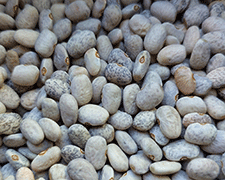
Tepary Bean 'Blue Speckled'
UTPhaseolus acutifolius 'Blue Speckled' tepary bean has narrow pods, 5 cm long; the beans are small, rounded, tan coloured with attractive blue-grey markings. The nutty flavour and dense texture are delicious in soups, stews and traditional Mexican dishes. It is less tolerant of extreme heat than other tepary beans and believed to be a seed race of Mayan descent. Days to harvest: 60 - 120 SB472 (approx. 10 seeds per pkt.) SB474 SB106 |
 Tepary Bean 'Brown Pawl'
UT
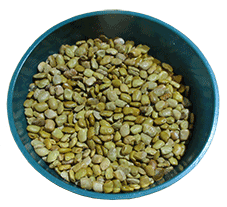
Tepary Bean 'Brown Pawl'
UTPhaseolus acutifolius 'Brown Pawl' tepary bean has narrow pods, 5 cm long; the beans are small, flat and brown with a sweet earthy taste; it retains its shape and firmness when cooked. Days to harvest: 60 - 120 SB456 (approx. 10 seeds per pkt.) SB188 SB104 Grower needed... |
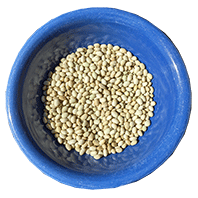 Tepary Bean 'White Hood'
UT
Tepary Bean 'White Hood'
UTPhaseolus acutifolius 'White Hood' tepary bean has narrow pods, 5 cm long; the beans are small, rounded and greyish white with a slightly sweet, nutty flavour and creamy texture. Days to harvest: 60 - 120 SB101 (approx. 10 seeds per pkt.) SB170 SB105 |
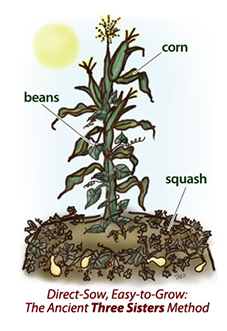 The Three Sisters Garden
This is a traditional Native American planting method using an inter-crop of corn, beans and squash. This vegetable guild sustained the Native Americans both physically and spiritually. In legend, the plants were a gift from the gods, always to be grown together, eaten together and celebrated together. Each of the sisters contributes something to the planting. Together, the sisters provide a balanced diet from a single planting. As older sisters often do, the corn offers the beans needed support and are planted first. The beans, the giving sister, add nitrogen to the soil for the benefit of all three. The large leaves of the squash vines protect the threesome by creating living mulch that shades the soil, keeping it cool and moist and preventing weeds. In this case it needs to be a running squash, not a bush squash like zucchini. In North American the term 'summer squash' is used for zucchini and button squash that are thin-skinned and do not store well; 'winter squash' is used to describe pumpkins and thicker-skinned squash like 'Delicata' or 'Vegetable Spaghetti'. Good choices are smaller leafed and smaller vines of Butternut Cucurbita moschata, 'Delicata' or 'Vegetable Spaghetti' Cucurbita pepo rather than the biggest pumpkins Cucurbita maxima like 'Queensland Blue' and 'Australian Butter'. Together, the three sisters provide both sustainable soil fertility as well as a healthy diet. |
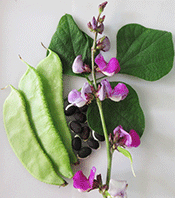 Bean 'Poor Man's'
Rare
H
UT
Bean 'Poor Man's'
Rare
H
UTLablab purpureus syn. Dolichos lablab syn. Tongan Bean, Bonavist pea, Indian bean, bataw Poor Man's Bean is an old Australian heirloom and was once found on many backyard fences in QLD. It is not forage lablab, which has much coarser pods. The deep pink flowers are followed by pale green pods, resembling snow peas in shape when young. It is a short-lived perennial and will live for 2 - 3 years. It is hardy and good at coping with wet, humid conditions. It is grown for its young, tender pods, edible leaves and flowers and is a popular vegetable in South East Asian and African cooking. The mature pods and dried beans contain toxins so should be well-cooked with a change of cooking water. It climbs vigorously to 2 - 3 metres and requires a strong trellis. Wait for warm, humid weather before sowing; it needs a soil temperature of at least 25°C to germinate well. It tolerates a wide soil range but prefers fertile, well-drained soil. SB369 (approx. 10 seeds per pkt.) |
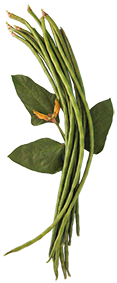 Snake Bean Climbing 'Red Dragon'
H
UT
Snake Bean Climbing 'Red Dragon'
H
UTVigna unguiculata var. sesquipedalis syn. Chinese Long Beans, Yard Long Bean, Asparagus Bean 'Red Dragon' produces 60 - 70cm long, dark green slender pods with a small red-brown tip; seed is red coloured. Highly productive and can be picked for approx. 4 weeks. Snake beans are very nutritious and have a slightly sweet flavour and crunchy texture; use them steamed, in stir-fries or curries. Snake bean is resistant to Bean Fly and Rust that can make French or runner beans difficult to grow over summer. Sow all year round in tropical and frost-free areas. Elsewhere sow from spring to early summer. SB296 (approx. 20 seeds per pkt.) |
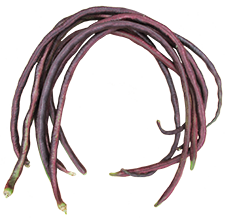 Snake Bean Climbing 'Red Noodle'
H
UT
Snake Bean Climbing 'Red Noodle'
H
UTVigna unguiculata var. sesquipedalis syn. Chinese Long Beans, Yard Long Bean, Asparagus Bean 'Red Noodle' produces 30 cm long, attractive dark red slender pods; seed is a reddish brown colour. Highly productive and can be picked for approximately 4 weeks. Snake beans are very nutritious and have a slightly sweet flavour and crunchy texture; use them steamed, in stir-fries or curries. Snake bean is resistant to Bean Fly and Rust that can make French or runner beans difficult to grow over summer. Sow all year round in tropical and frost-free areas. Elsewhere sow from spring to early summer. SB402 (approx. 20 seeds per pkt.) |
 Bean 'Winged'
H
UT
Bean 'Winged'
H
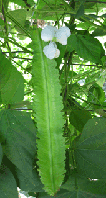
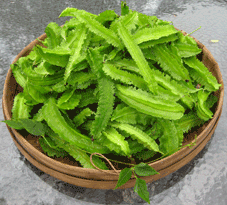
UTPsophocarpus tetragonolobus syn. Goa Bean, Asparagus pea Winged bean is a vigorous, tropical climber with mauve-blue flowers and four-angled pods with wavy margins. The pods, leaves, flowers and tubers are all edible. It is high in protein: the seeds contain 34% protein and 17% oil; the root contains 20% protein. If you are growing it for pods, leaves or flowers, grow it on a trellis; a trellis is not needed if you are growing it for the tuberous roots - let it sprawl. Of course, you will need to replant annually if you are harvesting the roots. The young leaves (top three sets of leaflets on a shoot) are cooked and eaten. The flowers taste like sweetish mushrooms. It is among the world’s most effective nitrogen-fixers. A short day length (11-13 hours of daylight) during hot weather is required to flower, so it is not suitable for temperate areas; it is also very frost sensitive. It grows to 3 - 4m. Wait for warm, humid weather before sowing; in the subtropics sow November - December; in the tropics sow October until January. It will grow on a wide range of soils but requires moisture to do well; it tolerates acidity. Plant rows 1m apart; with 30 - 60 cm between plants. To improve germination either rub seeds with sandpaper or soak in hot water until the seeds swell. Harvest the pods when 10 - 20 cm long; use like green beans. Days to harvest: 60. SB113 (approx. 15 seeds per pkt.) SB214 SB244 SB189 |
At Green Harvest we are passionate about open-pollinated, heirloom seed as we believe it is a resource belonging to all people,
not a product to be exploited by a few. Open-pollinated vegetable seeds are genetically diverse treasures that have been passed
on from generation to generation of gardeners. We invite you to contact us
if you would like to help us preserve open-pollinated seed varieties in Australia.
More information on seed saving...
|
Green Harvest specialises in seeds which are:
|


A
free
Successful Seed Raising Guide is included with your first seed order from Green Harvest.
Seed to WA:
A $6.95 Quarantine Fee will be charged for all seed orders to WA. Green Harvest is sharing the cost of
the quarantine fee with all our WA customers.
Read more...
Home
Green Harvest Organic Gardening Supplies is permanently closed as of 5pm on 1-11-2023.
We will not be taking orders by this website, in person, by phone or email. Our display garden and retail shop are closed forever.
Read more...
Phone:07 54357000
Phone calls will only be responded to sporadically and only in reference to orders placed prior to 2-11-2023. All the useful growing and organic pest management research and resources are available on this website for a while still.
We guarantee our seeds to the value of the purchase price. We are happy to replace the seeds, give you a credit or refund, whichever you prefer. Other than our guarantee to the extent of the purchase price Green Harvest gives no other warranty expressed or implied. No liability will be accepted by Green Harvest, its owners or employees as to the accuracy of any information. No responsibility will be taken for damage to property or persons due to information given about a product or technique. No responsibility will be taken for the loss of a crop or income due to information given about a product or technique.
 Shopping here is private and secure.
Copyright © 2001 - 2024 Green Harvest Organic Gardening Supplies
No part of this website may be reproduced without permission of the owner