Organic Seeds Edible Plants Organic Pest Controls Books Tools, Propagation & Fertilisers Sprouting & Microgreens Poultry Supplies Specials

Top

We will send an email to this address*

when is next available

* we will use this email address only for this notification and then we will delete it.
Whatever you order - the maximum total postage and handling is only $9.95
Now available for planting: Elephant garlic has a mild, sweet flavour with huge cloves; it can grow from the tropics to temperate regions. Red and Golden Shallots are a gourmet addition to the garden.
Home
Okra   Onion   Welsh Onion  
Okra H syn. Lady's Fingers; Gumbo; kok-tau, jiao dou (Chinese); kopi arab (Indonesian); kacang bendi (Malaysian); kachieb (Thai); dau bab (Vietnam)
Abelmoschus esculentus syn. Hibiscus esculentus
Okra grows as a vigorous, annual bush to 1-1.5m tall. It is a truly heritage vegetable having been grown by the ancient Egyptians. Sow okra direct, after frost, it needs a warm soil to germinate. Keep soil moist. It grows best in a fertile, well-drained soil, slightly acid pH 6.00 - 6.5, prepared with plenty of organic matter. Plant bushes in full sun 30-40 cm apart. Soak seed for 12 hours before planting to improve germination. Sow seed 2 cm deep. For continuous production harvest pods every day, when about 8 cm long. Sow spring and summer. Suitable for temperate (if started early), subtropical and tropical areas.
Okra 'Mammoth Spineless' H Organically certified
Okra 'Mammoth Spineless' is highly productive tall bush, up to 2m tall with green stems and leaves. The slightly ribbed, vibrant green pods are best harvested small, less than 10 cm long.

SO127 (40 seeds)

SO128

SO169
Okra 'Red' H Organically certified
Okra 'Red' is high yielding with rich scarlet, tender pods to 15-17 cm long, that turn green once cooked.

SO100 (40 seeds)

SO131
Find vegetable seeds for hot humid areas here.
Onion
Allium cepa
Onions are slow to germinate and slow growing, requiring close attention to weeding and watering. They do best on fertile soils and are suitable for temperate and subtropical areas. They prefer an open, sunny site, with free drainage and a pH above 6.5. The flowers of onions are attractive to bees and other useful insects. Onions are mostly grown as a winter crop. In southern Australia onions are sown (depending on variety) from mid-May to August; in Queensland onions are usually sown from March to June. Seed is hard to germinate in hot weather. Sow seed 1 to 2 cm deep, cover with soil and firm down. Space rows 25 - 30 cm apart. Seed takes 7 - 10 days to germinate. Thin to 8 - 10 cm apart in the rows to produce a good-sized bulb. It takes 12 weeks for seeds sown in trays to be ready to transplant. To transplant, trim the tops and avoid planting them too deeply, less than 1 cm deep. Onions are ready to harvest when the tops shrivel just above the bulb and bend over. You can lift them early while the tops are still green but they will not keep well. Mature onions can be stored in open mesh bags in a cool, dark, well-ventilated position.
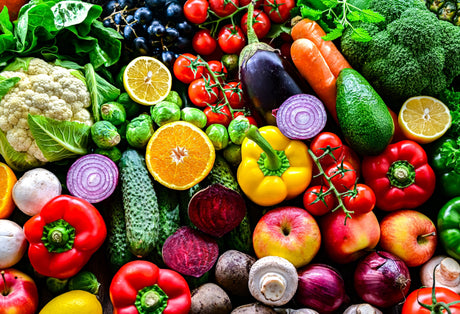
Onion 'Lockyer Gold' Organically certified
Allium cepa
'Lockyer Gold' is a short day, early maturing variety similar to Lockyer Brown. It is an excellent onion for warmer areas and a very good keeper. The bulbs are globe-shaped with an attractive golden skin and pungent flavour. 'Lockyer Gold' can be planted from late March to the end of May in Queensland. Unsuitable for Tasmania. Days to harvest: 165 - 195.

SO147 (200 seeds)

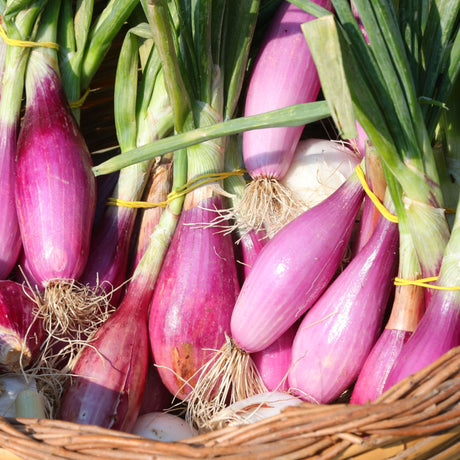
Onion 'Long Tropea Red'
Allium cepa
Also known as 'Tropeana Lunga', 'Tropea Rossa Tonda'.
An Italian heirloom traditionally grown in Italy and France. It is a intermediate-day onion with torpedo shaped bulbs up to 15 cm long. The bulbs have red skins and sweet, rosy flesh. It is ideal for eating raw in salads due to its mild flavour and high sugar content. It can be picked young as an attractive bunching onion. It will store for up to 3 months. Seed germinates best at 10 - 23°C; in cool temperate and highland areas sow in July; in warm temperate areas sow May - June; in subtropical areas Lockyer cultivars will do better; it is unsuitable for tropical areas. Days to harvest: 90 - 110.

SO144 (200 seeds)

Onion 'Mini Purplette' Organically certified
Allium cepa
Pearl onion with glossy, rich burgundy skin, golf-ball size; sweet, delicate, mild flavour. It is a good choice as a pickling onion. One of the easiest onions to grow.

SO101 (200 seeds)

SO102
Onion 'New Zealand Creamgold' Organically certified
Allium cepa
syn. Pukekohe Longkeeper
'NZ Creamgold' is a long-day length onion, suitable for cooler areas. In cool areas sow July; in temperate areas sow mid May - August; it is not suitable for Qld or coastal NSW. The bulbs are globe-shaped with a light brown skin and pungent flavour. It is one of the longest keeping onions, stores 6 - 8 months. Days to harvest: 195 - 225.

SO139 (200 seeds)

SO140

SO141
Onion 'Stuttgart Long Keeper'
Allium cepa
'Stuttgart' is an old variety with outstanding storage capacity. It is a long-day length onion, suitable for cooler areas. The medium-sized bulbs are a flattened globe with a glossy, light brown skin and crisp, creamy-yellow flesh. It is also useful for spring onions. Onions are slow to germinate and slow growing, requiring close attention to weeding and watering. Seed germinates best at 10 - 23°C; in cool temperate and highland areas sow in July; in warm temperate areas sow mid May - August; in subtropical areas Lockyer cultivars will do better; it is unsuitable for tropical areas. Days to harvest: 195 - 225.

SO157 (200 seeds)

Onion 'Red Creole'
Allium cepa
'Red Creole' is a short-day, medium-sized red onion especially suited for warmer, subtropical areas. The flattened, globe-shaped bulbs have a pungent, spicy purple-red flesh. It is excellent for storing; use in cooking or salads. Sow in temperate areas from late May to July; in subtropical areas late March to end of May; it is unsuitable for wet, tropical areas. Days to harvest: 95 - 110.

SO160 (200 seeds)

SO161
Onion 'Red Rocket'
Allium cepa
'Red Rocket' is a very early maturing red onion, suited to SE Queensland and areas further north. The globe-shaped bulbs have a pungent, spicy flesh. It is excellent for storing; use in cooking or salads. In temperate areas sow May to July; in subtropical sow late May to July; it is unsuitable for tropical areas. Days to harvest: 95 - 110.

SO162 (200 seeds)

Onion 'Tanami Red'
Allium cepa
'Tanami Red' is a bright-red, globe to flattened globe-shaped onion, suited to areas from mid NSW south to TAS; it is an intermediate-day onion. It has reasonable keeping quality for a red onion. Red onions are milder in flavour than other onions and are often used raw. Onions are slow to germinate and slow growing, requiring close attention to weeding and watering. Seed germinates best at 10 - 23°C; in temperate areas sow late May to July; in subtropical areas Lockyer cultivars will do better; it is unsuitable for tropical areas. Days to harvest: 195 - 225.

SO151 (200 seeds)

Welsh or Bunching Onion
Allium fistulosum
Also known as Welsh onion; Japanese bunching onion; evergreen bunching onion; taai tsung, qing cong, xiao cong (China); bawang daun (Indonesia); atasuki, negi (Japan); bawang daun (Malaysia); ton horm (Thai); hanh (Vietnam).

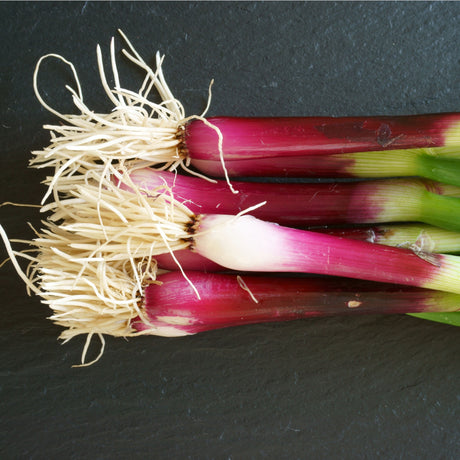
Welsh onions are a hardy, non-bulbing, often perennial, spring onion with a mild, sweet flavour. It has tube-like, hollow, green leaves above white stems; the white shaft plus a few cm of the green leaves are eaten. It is a versatile plant, extremely hardy and pest resistant, that will generally grow from cold regions right through to hot, tropical areas. The seeds can also be sprouted. Older varieties will form a clump; some modern cultivars are best grown as annuals and will fail to clump up very much at all. Welsh onions prefer an open, sunny site, with free drainage and a pH above 6.5. The flowers of Welsh onions are attractive to bees and other useful insects.

Sow seed in autumn or spring; it germinates best at 10 - 24°C soil temperature; in warmer areas try germinating the seed tray in the bottom of the fridge to get it started. Sow seed into a seedling tray, 5mm deep, cover with soil and firm down. Transplant the seedlings once large enough to handle. Space rows 30 - 70 cm apart with 15 - 30 cm between plants. Seed takes 7 - 21 days to germinate. Established clumps can be divided to for propagation material.
Onion 'Green Stem Welsh' H Organically certified
Allium fistulosum
A non-bulbing, open-pollinated, perennial, spring onion which readily forms a clump; this is a very useful addition to any garden. Bunching onions have a mild, sweet flavour; the green shaft plus a few cm of the green leaves are eaten. The seeds can also be sprouted. The flowers are attractive to bees and other useful insects. This is a versatile plant with tube-like hollow leaves; it will grow from cold regions right through to hot areas. Sow seed in autumn or spring; it germinates best at 10 - 24°C soil temperature. It prefers a neutral to slightly alkaline soil and is extremely hardy and pest resistant. Grow it in full sun. They can be propagated from offsets once clumps are established.

SO110 (200 seeds)

SO111

SO112
Onion 'Ishikura Winter Long'
Allium fistulosum
'Ishikura' is a popular variety in Japan for its long, white stems and excellent flavour. It has a very long 45 cm of white stalk; 75 cm overall in length. It is a vigorous, non-bulbing spring onion with tube-like, hollow, blue-green leaves. Use it in salads, stir-fries and soups. It will grow from cold regions right through to subtropical areas. It is hardy, frost tolerant and pest resistant. 'Ishikura' is best grown as an annual and is unlikely to form a clump. Sow seed in autumn or spring; it germinates best at 10 - 24°C soil temperature. 66 days to begin harvest. This is an F1 hybrid so is not suitable for seed saving.

SO154 (200 seeds)

SO155

SO156

Asian and Tropical Vegetables For Hot Wet Summers
If you are challenged by pest and disease problems in your vegetable garden during hot, humid summers, don’t give up! Green Harvest offers a range of vegetables, grown around the world in subtropical and tropical areas, that we have found to be hardy and reliable to the weather extremes of high temperature and humidity experienced in the ‘wet season’. As a general rule sow these vegetables from October through to March, to replace more temperate varieties. Seeds suitable for subtropical and tropical conditions are marked H for hot and humid!

Part of the problem is gardening books written by authors from cooler areas neglecting to give good advice on plant selection for northern areas of Australia. We recommend the books The Seed Savers Handbook or Organic Vegetable Gardening for the best information on subtropical vegetables.

HOW TO SHOP
Use the Minus Sign to subtract one and the Plus Sign to add one, to the quantity. Or simply type the number and hit enter. View your selection or complete your order hereCheckout Having trouble? Call Green Harvest on 1800 681014 Mon-Fri 9am to 5pm (EST) Queensland.

Home
Why Shop with Us Free Australian Organic Gardening Resource Guide Contact Us About Us
DISCLAIMER:
We guarantee our seeds to the value of the purchase price. We are happy to replace the seeds, give you a credit or refund, whichever you prefer. Other than our guarantee to the extent of the purchase price Green Harvest gives no other warranty expressed or implied. No liability will be accepted by Green Harvest, its owners or employees as to the accuracy of any information. No responsibility will be taken for damage to property or persons due to information given about a product or technique. No responsibility will be taken for the loss of a crop or income due to information given about a product or technique.
Shopping here is private and secure.
              Blog: earthwise gardening
Copyright © 2001 - 2013  Green Harvest Organic Gardening Supplies
No part of this website may be reproduced without permission of the owner